Wildwood (2026) Review: A Dark Fairytale That Invites Us to Dream
Over a decade in the making, Laika Studios, the makers of Coraline, and Kubo and the Two Strings, are back with another transportive dark adventure fairytale. When her brother is kidnapped, a girl enters a forbidden forest that cloaks a fantasy world to find him.
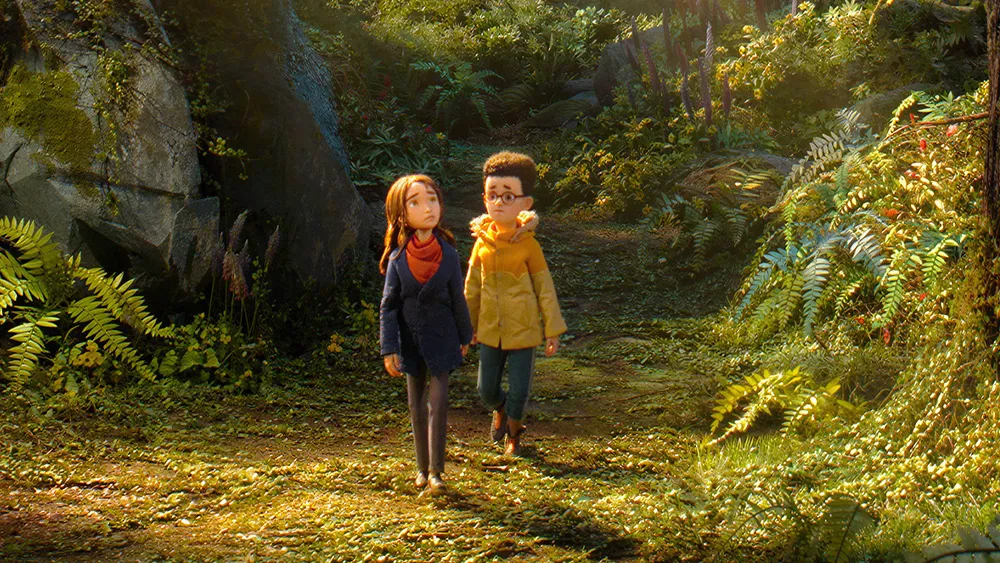
Beyond the extraordinary craftsmanship of its stop-motion animation, Wildwood works because of its darkness. Death, sacrifice, cultural differences, and bureaucracy all find their place in this strange, enchanting world. It’s that line between reality and make-believe that makes the film so compelling, setting the story in Laika’s own Portland, Oregon, before opening up the possibility of a world that exists on its fringes, where a postman can exist in the same space as talking coyotes.
The movie does two surprising things. Firstly, it gives us a teenage lead, Prue McKeel (Peyton Elizabeth Lee), who doesn’t conform to the whiny, self-absorbed stereotype. However, it stops short of giving her a much-needed bollocking for immediately breaking the one rule her parents give her when she’s left to babysit her brother. The second unexpected beat is a mid-film narrative reset that breathes new life into the story and gives it a second wind.
Carey Mulligan voices the film’s antagonist, Alexandra, the heartbroken dowager governess. Her cold, assumed authority over the woods casts a shadow over the film, in direct contrast to Prue’s parents (Jake Johnson and Maya Erskine), who quickly lean into acceptance when they learn their child is gone. These parents sit at opposite ends of the spectrum, leaving the audience to question how far into the darkness they’d travel to get what they want, whether they’d be able to return to the light if they failed, and whether they could live with whichever path they chose. The question of parental responsibility and children taking up arms to right their wrongs is perhaps a psychological step too far and a conversation best left debated in intimate circles. Instead, we allow Prue to fulfill her role, skating over adult conversations in that indignant simplicity of childhood innocence.
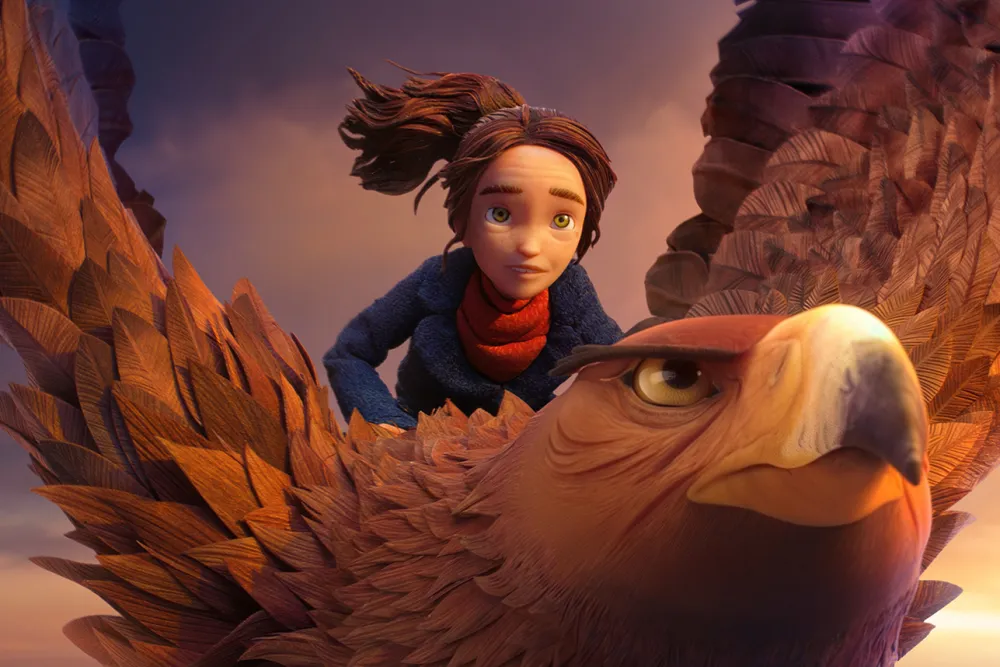
For all its originality, there is something achingly familiar about Wildwood. A child being snatched off to another realm conjures images of Jim Henson’s Labyrinth (1986). The talking creatures, the dark magic-wielding dowager governess, and a world that exists on the fringes of our own all parallel The Lion, the Witch and the Wardrobe (2005). At one stage, a character yells, “Look to the skies,” in a line that feels copied and pasted from the 2005 fantasy epic. That’s not the only film Wildwood draws on. When Prue rides on the back of a majestic golden eagle, its claw skimming a crystal-clear body of water, we’re instantly reminded of Harry on Buckbeak in Harry Potter and the Prisoner of Azkaban (2004). Heck, at one stage, a murder of crows takes over a children’s playground in a moment that could come straight from Hitchcock’s The Birds (1963).
It’s these connections to a bygone era of believing in the impossible that make Wildwood a film not just for kids, but for adults, too. This epic story is laced with folksy whimsy and magic that supersede the narrative, their presence felt in the tremendous amount of work that went into bringing this world to life. It’s a movie that invites us to dream, imagine the impossible, and reconnect with our inner child.
Rating: 4/5
Watched as part of London Film Festival 2026