Wicker (2026) Review: A Rom-Com Woven For The Female Gaze
It is a truth universally acknowledged that a spinster shunned by her gossipy neighbours, must be in want of a wicker husband.
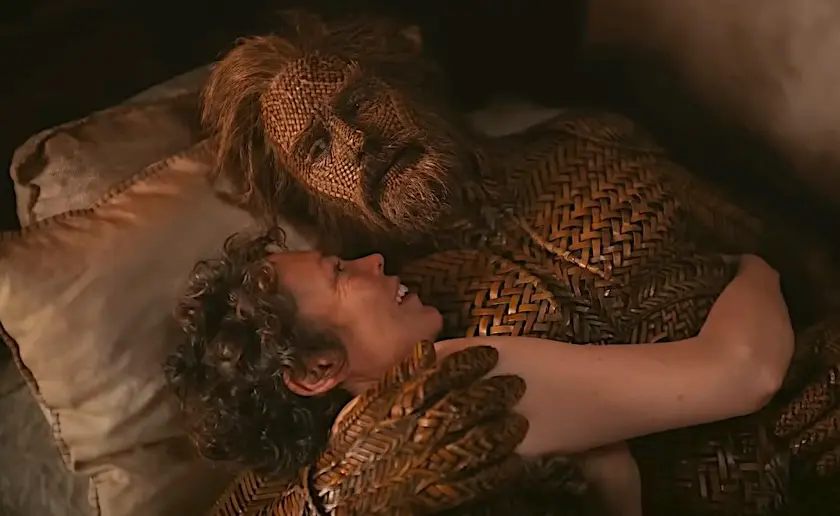
Wicker is a fantasy rom-com, not to be confused with the 1973 horror film, Wicker Man, though members of a small town are horrified when the local fisherwoman marries a man made from wicker. If there were ever two actors to bring the weird and the wonderful to life, it would be Oliva Colman and Alexander Skarsgård.
Skarsgård does his stoic thing, and as usual, it works. Instead of opting for CGI, a 3D-printed prosthetic shell was specified to fit Skarsgård’s body, with real wicker woven over the top. The sound design team likely had a field day constructing the creaks of wicker every time he moved. The sound became its own movie and was responsible for a number of comical and tense moments in its presence and its absence.
While Skarsgård has his adornments, Colman shines because she is brilliantly ordinary. It’s easy for the audience to relate to her, sympathise with her and understand her wants and desires as a woman on the outside looking in.
Fisherwoman has her face pressed against the glass of a community of seemingly content married women: Tailor’s Wife (Elizabeth Debicki), Baker’s Wife, Bar Keeper’s Wife, and the newly collared Bottle Washer’s Wife. The naming of the characters is effective in their simplicity and heavy-handed meaning, but this collection of zany, single-minded characters populating this world is part of the movie’s charm.
Debicki is a mediaeval mean girl, Nabhaan Rizwan is her boring husband, and Peter Dinklage plays Basket Weaver, the maker of wicker husbands. His Shakespearean-worthy soliloquies are a tender touch that help preserve the folklorish nature of the film. Inadvertently, he sends the village women and their husbands into a tailspin, deconstructing their ideas of marriage; the wives suddenly want tender words spoken to them, they want to work, and they want to be seen as equal partners and for their husbands to help without being told, creating a storm of jealousy towards the woman they previously pitied who has all of that and more.
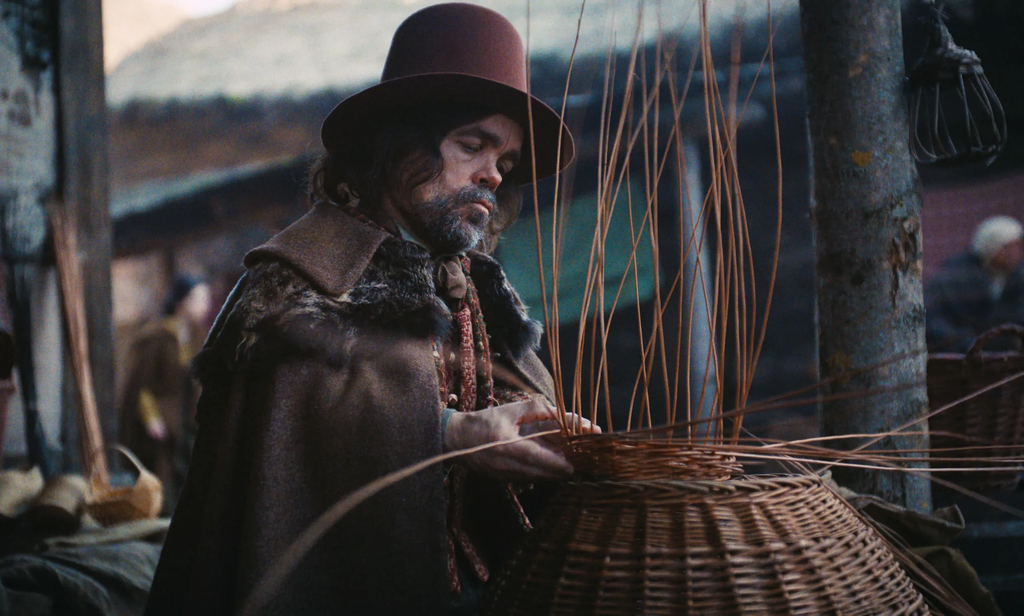
Despite casting us back in time, Wicker is part of a very current conversation about the wants and needs of romantic partnerships. Sure, it’s Alexander Skarsgård behind all that wicker, but it’s still a man made from wicker. And so the lip-biting desires, the jealous glares and the bar he sets for the husbands become about more than looks. He has been constructed for the female gaze, and it’s his tenderness, his honesty and his actions that disrupt our ideas of romance, or, for others, reaffirm them.
The premise for Wicker might sound like something out of a dark fantasy romance book you’d hide on your e-reader, but its contemporary ideas and romantic notions are crystal clear: romance isn’t about creating the perfect man or choosing one to please others around you; it’s about recognising the qualities you desire in a partner that make a relationship worth wanting.
Rating: 3/5
What did you take away from Wicker?
Watched as part of London Film Festival 2026