Bad Apples (2025) Review: It Just Takes One To Ruin The Bunch.
Bad Apples sees a teacher pushed to the end of her tether by a disruptive pupil, ending up in a situation that is way over her head and pay grade. Through a dark and comedic lens, the film explores what happens when the education system, parents and teachers all fail to adequately handle disruptive classroom behaviour and simply mark a child as being a ‘bad apple’.
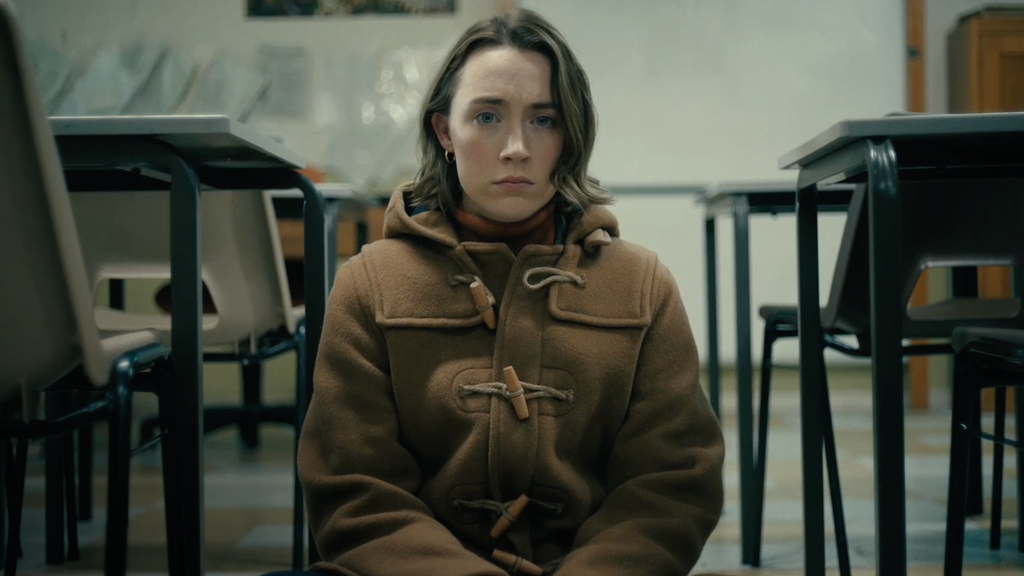
There’s something wonderfully conflicting about a film that makes you root for someone who has done something objectively bad. Bad Apples puts Saoirse Ronan in precisely that position, and who better? Ronan’s particular brand of dry humour can wring comedy out of the most morally uncomfortable situations and make the audience hope and pray she gets away with it.
Underneath the anxiety-inducing scenes of kidnapping and fear of discovery is an interesting discussion of the increasingly blurred line between teaching and childcare. The burden to educate, discipline, and mould young minds is shifted from busy parents to exhausted teachers who inevitably reach breaking point.
Speaking of breaking point, we have the children at the centre of it all. The film does an interesting job in the characterisation of the primary ‘bad apple’, Danny (Eddie Waller). He is given an almost feral look and manner which helps the audience to, not exactly empathise with, but understand Maria’s choices. By making it harder for us to see him as a child, we buy into the deceit and see what Maria sees, before perspectives and perceptions shift.
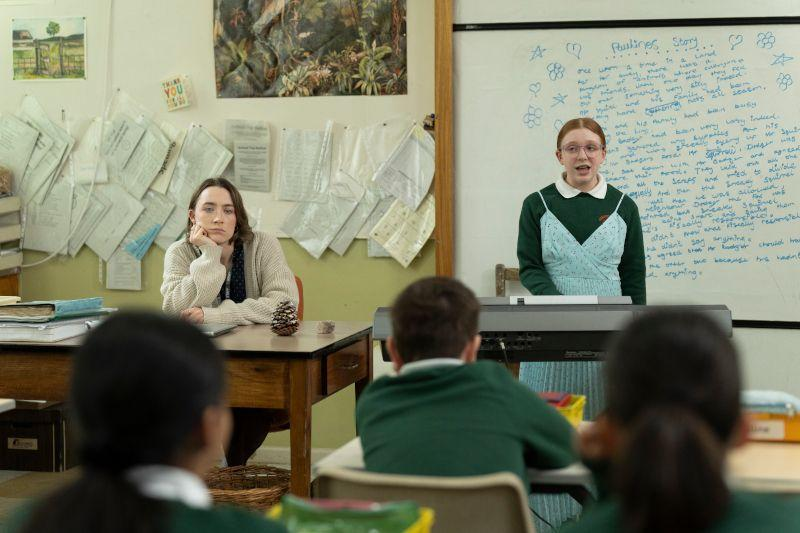
Another facet the film explores is the toxicity of idolatry: the pedestal children can place teachers on, and, more importantly, the dangers of leaning into that adoration. Nia Brown is almost a little too good at playing the skilfully annoying teacher’s pet Pauline, whose obsession with Maria is frightening, to say the least. It gives the movie an interesting shift in its power dynamics while adding another layer to its examination of authority, responsibility and the influence adults have over children.
Of course, Bad Apples takes one situation to the extreme, but it winds itself a tight noose and leaves us with one question: how do you prove a point, satisfy an audience, and wrap things up so teachers across the country don’t start getting any ideas?
Answer: You don’t.
Writer/director Jonatan Etzler set himself a tall order that he doesn’t quite deliver. The ending shrinks back at the last minute, when it could have pushed to underscore the film’s central theme of teachers becoming surrogates for parents. Instead, Bad Apples chooses an ending with an understated irony, one that is at least in line with the unexpected and a little twisted, tone of the film.
Rating: 3/5
Pingback: Dark Skin Bruises Differently (2025) Review | Just Jen's Reviews