The Social Reckoning (2026) Review: A Status Update Too Smart for Its Own Good
A companion piece to David Fincher’s The Social Network (2010), Aaron Sorkin steps into the director’s chair to give the world a status update on Facebook’s social impact sixteen years later. Whether anyone actually needs one remains to be seen. The crux of The Social Reckoning follows a whistleblower within Facebook and the events that led to the release of The Facebook Files, which exposed the platform’s internal practices, triggering legislative scrutiny.
The opening few minutes are truly electrifying. A drunk white woman standing beside her car is approached by two Black police officers. The interaction is an artful minefield, juggling discrimination, power, racism, the court of public opinion and social media as both a platform, player and purveyor of rage. There is something dirty about the footage we are watching, something someone has chosen to upload for validation. It sets the tone for the film this could have been: an exploration of how social media, with Facebook at its helm, has shaped the world one upload at a time.
This opening is the spine of the film, but it is quickly buried beneath grandstanding, shifting timelines, wrist warmers and a whole lot of technical mumbo jumbo.
If you know Aaron Sorkin’s body of work, from The West Wing to Molly’s Game and his take on another tech billionaire in Steve Jobs, you’ll walk into this film expecting whip-smart dialogue, intellectually stimulating conversations and a lot of walking and talking. This time, Sorkin is too smart for his own good. No matter how many times the letters MSI are uttered or the figure of 64% is repeated, none of it sticks. No amount of Sorkinisms will convince you that you understand what these people are saying, let alone why it matters. There are moments when you can feel the penny dropping for the characters, but the audience is still twirling a rusted copper coin across its knuckles.
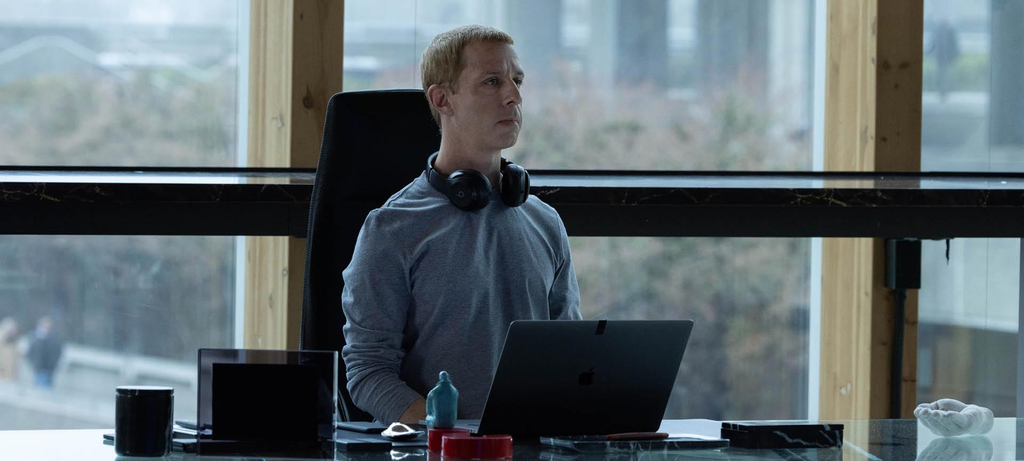
In her first major film role since Anora (2024), Mikey Madison is good as Facebook whistleblower Frances Haugen, but it is her friendship with Jeremy Allen White’s Wall Street Journal reporter, Jeff Horwitz, that gives the film some much-needed levity. The drizzle-soaked San Francisco setting reinforces the film’s sombre tone while allowing Madison and White to play spy with clandestine meetings, trench coats, burner phones and all. Jeremy Strong’s grandstanding Mark Zuckerberg, meanwhile, is a stiff meerkat and arguably the least interesting part of the film, and not only because, as the antagonist of sorts, he doesn’t get what’s coming to him.

Reckoning is a loaded word. It conjures visions of justice and accountability, of wrongs finally being righted. Yet, while the world is still grappling with social media’s impact, this companion to The Social Network feels more like an update than a reckoning. The title promises accountability, but the film struggles to deliver it.
Heck, even though the narrative returns to that opening encounter between a white woman and two Black police officers, there is no reckoning, much less a reawakening, for her either; thankfully at least we aren’t asked to pity her for her radicalisation. Despite everything the characters endure and everything the audience sits through, remarkably little changes. There is a particularly moment in recent history the film snowballs toward, which acts as its grand consequence, its reckoning, but when it lands, it’s more of a light shove rather than a grand slam.
The Social Reckoning presents itself as an important film, and to an extent, it is. Perhaps the problem is that, in its determination to explain the machinery behind Facebook’s influence, The Social Reckoning loses sight of the people living with the consequences: its audience. For all its intellectual posturing, Sorkin’s film is too smart for its own good.
What did you think of The Social Reckoning?