Gentle Monster (2026) Review: When the Monster Shares Your Bed
When her husband is arrested for an unspeakable crime, a woman must decide whether she can continue living in the illusion of a happy family.
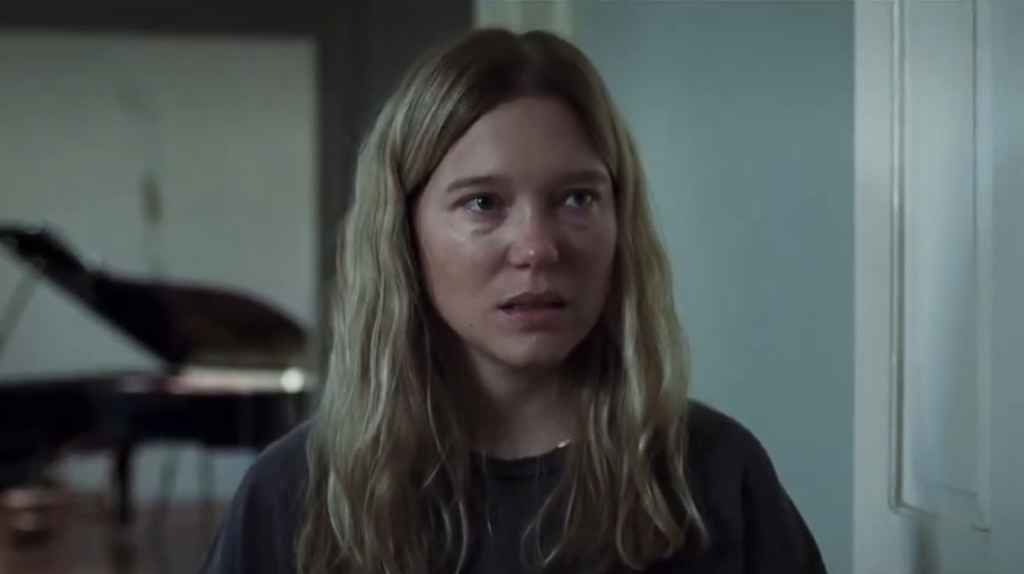
Gentle Monster is a fitting title for a film that operates in the murky grey between good and evil. Philip Weiss (Laurence Rupp) possesses an extensive collection of illegal imagery of children. Tall, handsome and seemingly unassuming, he appears to have it all: an attractive wife, a well-behaved child and the outward trappings of a happy family. The disconnect between this image and the reality of his crimes makes him devilishly difficult to comprehend. As an audience, we feel as deceived as his wife, Lucy Weiss (Léa Seydoux), having been drawn into the same illusion of domestic bliss.
One of the film’s main issues is that, although this is supposed to be Lucy’s story, Philip remains at its centre. His constant presence dilutes our ability to connect with her, which is a shame because Seydoux gives a compelling performance. She can be a little theatrical at times as the distressed musical prodigy who left city life after her husband’s burnout– oops, and there it is again: a woman defined by her husband, both in her backstory and in the present narrative. The new stereotype of female characters slowly unravelling over their husband’s mistakes continues in Gentle Monster.
Still, the conversation Gentle Monster opens up extends beyond gender representation. It’s a film designed to provoke debate (or at least invite conversation), asking how we reconcile the people we know with the things they’ve done.

When Philip’s crimes come to light among family and friends, the responses are mixed. Friends insist, “It’s not that bad.” He is still invited to a wedding alongside Lucy, who is expected to sit next to him and act as though she isn’t sick to her stomach. His mother declares, “He’s still my son,” while Lucy’s mother is disgusted and wants to know whether Philip has harmed her grandson, the blissfully ignorant, blond-mopped Johnny. What is the difference between possessing these images and actively engaging in abuse? How far into the grey must we venture before acknowledging that we’re standing in the dark? The film cleverly mirrors scenes from its opening towards the end, allowing familiar moments, and object, like Johnny’s trampoline, to take on a sinister new meaning once the truth is revealed.
Gentle Monster is at its strongest when exploring the varying effects of Philip’s crimes on those around him. Its moral ambiguity is less effective in the half-baked B-story involving the personal life of Elsa Kühn (Jella Haase), the officer investigating Philip. The sordid nature of her work takes its toll, her father’s health is deteriorating, and Lucy strangely tries to befriend her. It’s fine, though; ultimately, their interactions fail the Bechdel test, with their conversations revolving around Philip. Even in a film ostensibly interested in the women left to deal with the fallout, the man responsible remains the gravitational centre.
Gentle Monster asks its audience to sit with an uncomfortable truth: people capable of committing horrific crimes do not always look like monsters. They can be charming, familiar and woven into the fabric of ordinary family life. The film’s refusal to offer easy answers adds nuance to a subject we might prefer to view in absolutes.
It’s a compelling premise, and the film is at its most unsettling when it forces us to confront the limits of what we think we know about other people. Yet its underdeveloped female characters remain a frustrating blind spot. In trying to illuminate the moral grey areas surrounding Philip, Gentle Monster leaves Lucy and Elsa too often in his shadow. The monster may be the subject, but the women deserve to be more than the people left to reckon with him.
Rating: 2.5/5
Watches as part of London Film Festival 2026