Cape Fear (1991) Review: 35th Anniversary of Scorsese’s Gothic Thriller
Martin Scorsese, the godfather of gangster, sides steps away from the themes found in seminal movies such as Goodfellas, Taxi Driver and New York, New York, instead trying his hand at gothic noir in his first true thriller.
A remake of the 1962 film of the same name, based on a novel by John D. MacDonald, Cape Fear follows a convicted rapist released after 14 years in prison, seeking justice. Although this is an anniversary review of the film, it’s also a ‘Finally Watched‘. Why now, you wonder? Well, with the recent Apple TV series starring Javier Bardem airing, what kind of cinephile would I be if I couldn’t gleefully tell people I’d seen the movie first?
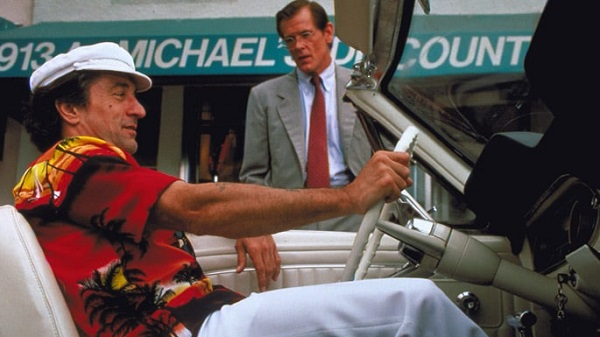
When it comes to Scorsese, nothing tops The Departed in my eyes, and there is something in that cat-and-mouse chase, that push and pull of power, that he toys with in Cape Fear.
At the heart of the film is the battle of wills between Max Cady (Robert De Niro) and his former defence attorney, Samuel Bowden (Nick Nolte). It’s less a straightforward tale of revenge than a slow dismantling of Bowden’s moral superiority.
Robert De Niro plays the key antagonist, Max Cady, and this is De Niro unlike anything I’ve ever seen. The cold brutality he exhibits throughout the film is made even more explosive by the layer of doubt the audience has over his crimes when we’re introduced to him. We see a philosophical, relaxed and even civil man, but it isn’t until we watch him violate an innocent woman that we understand the devil has moved to New Essex, and he’s out for blood and to prove a moral point.
Don’t get me wrong, the crude tattoos marking Cady’s body symbolise his tolerance for pain and a slight unhinged obsession with balancing the scales of justice—plainly visualised by the bastardised tattoo of Lady Justice on his back. It’s an ironic pursuit for a guilty man whose moral crusade is fuelled by Bowden’s duplicity. Bowden’s actions were morally grey but legally wrong, and Cady is determined to make him pay for both.
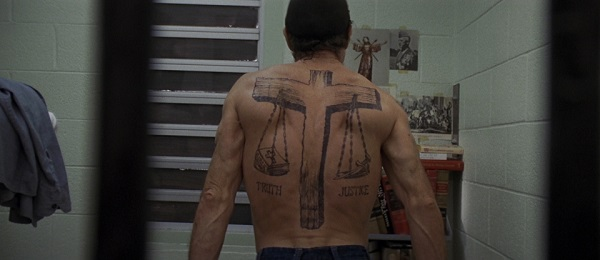
Cady is constantly telling Bowden, “You’re no better than me,” and it’s a joy to watch scenes unfold as Cady attempts to prove himself right. Cady, who has spent his years in prison learning to read and reading the law, has risen himself up to Bowden’s level. He describes them as two lawyers, which rankles Bowden because Cady attains something that, to him, is exclusive: education, prestige and moral grandstanding. Because at its base form, what else does a lawyer do in court all day? Cady builds himself up and tears Bowden down until they’re both rolling around together in mud.
Despite the Hitchcockian overtones, Cape Fear is a psychological thriller that lingers. The dramatic camera zooms, the split diopter shot, and the layer of neon reds, flash of x-ray vision, and the pure drama of it all feed into this moralistic horror-fantasy world in the best way. Although Bowden’s wife, Leigh (Jessica Lange), is relegated to the role of screamer and scorned, props to Juliette Lewis, who plays their daughter, Dani. She is a picture-perfect poster child for teenage angst and naivety in a way that gives you chills.
Watching Scorsese’s gothic horror today and seeing Cady and Bowden battle it out makes one ponder: is that the real fear Scorsese has underscored—a timeless reluctance to accept and inability to escape that deep down, when we strip it all back and lay ourselves bare, we are all equal?
Rating: 3.5/5
What do you think of this Cape Fear (1991) review, and is it worth watching the original adaptation?