
The generational war comes to a head in Luca Guadagnino’s film centred on the fallout of a student allegation against a teacher.
Where to begin? Because between the themes of consent, abuse of power, privilege, and the debate around cultural grandstanding, there’s a lot to absorb and then process in After the Hunt. Set within the confines of Yale University – a prestigious American college – the film becomes a microcosm of society’s most charged debates, pitting Gen Z idealism against Gen X self-preservation.
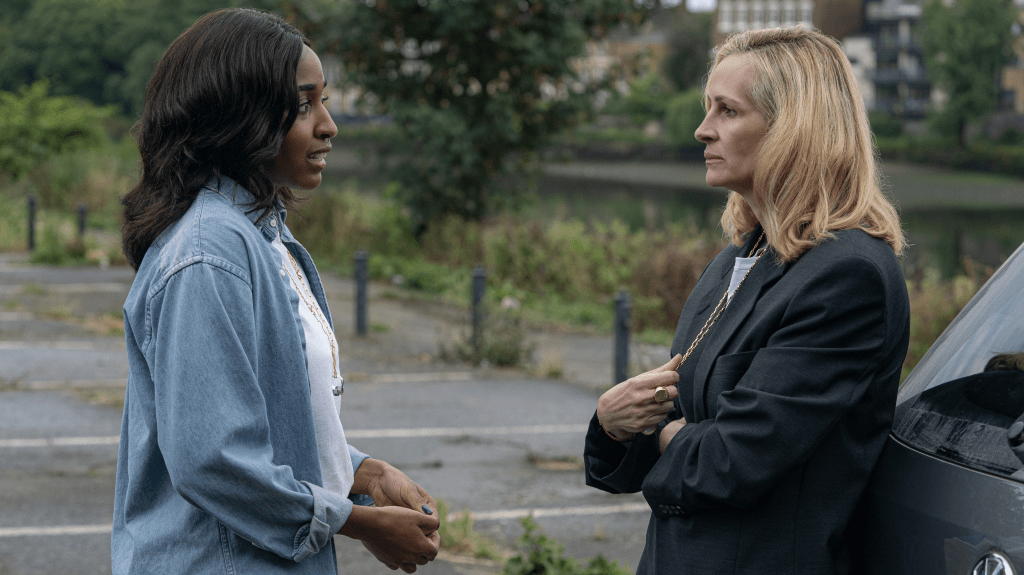
It’s a self-aware setup, but one that often feels like sitting through a mandatory lecture on ethics. Every character is armed and ready with a self-deprecating monologue about their place in society, defined by gender, race, class, or sexuality. Every exchange is laced with politically correct buzzwords. It’s Theory of Enlightenment 101, complete with assignments on fallout hypotheses and performative reckonings.
Perhaps that’s the point. Guadagnino isn’t so much exploring the discourse as satirising it. But the result is heavy-handed, ironically leaving little room for the audience to form their own thoughts, opinions, or interpretations.
The chaos of After the Hunt is anchored by Alma Olsson – a respected academic caught between doing what is right and what is easy. Played by Julia Roberts (who one would happily have as their teacher), she is captivating in her cool detachment, silent suffering and quiet unravelling. Andrew Garfield, almost unrecognisable from last year’s We Live in Time, is similarly transformed. His character Henrik – the accused – is morally questionable, and his heightened emotional responses are a great contrast to Roberts’ reservedness. There’s a terrific hallway confrontation between the two that crackles with authentic tension.
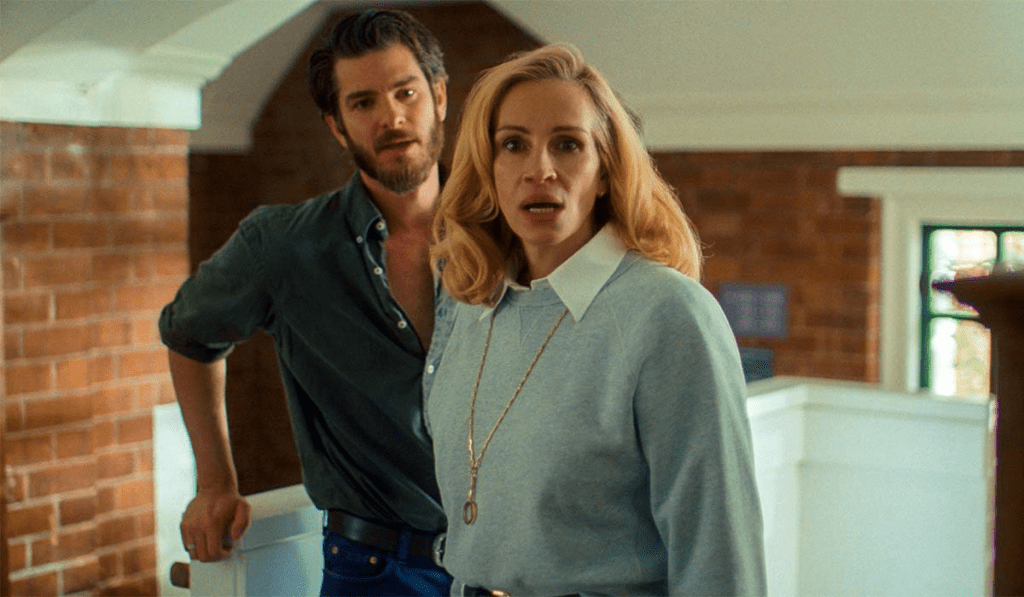
The secret of Alma’s past is literally eating her alive which manifests in her dependence on strong pain medication. In direct contrast in her Gen Z mentee Maggie Price (Ayo Edebiri) who is light and guilt-free after the professional and personal destructions she is central to. It’s said a burden shared is a problem halved, and Maggie has no qualms about sharing: speaking her truth to the press and the wave of supporters it attracts. Their differing reactions highlight a cultural clash in equally harmful attitudes toward privacy.
If you hate everyone in this film (bar Michael Stuhlbarg as the dutiful husband), that’s likely intentional. Guadagnino is observational, refusing to take sides. It’s why we can’t say for certain what transpired between Maggie and Henrik – our individual generational stances on the subject acts as a feedback loop to the film’s key point.

It’s this omniscient perspective that makes the ending – particularly its second half – feel like a shoehorned essay conclusion. Guadagnino tries to tie everything together but only succeeds in reminding us that we shouldn’t form our own hypotheses. We should only observe. After the Hunt may frustrate as it underlines rather than highlights discussions on topics many of us are already keyed into, but it lingers. It’s hard not to admire its attempt to view today’s world through the artifice of its characters.




 Film Reviews & Movie Analysis
Leave a comment