
Spanning five decades, Kokuho traces the life of Kikuo (Ryo Yoshizawa), who is ripped from his destiny as a member of a Yakuza group and placed into an upbringing in the rarefied, tradition-bound world of kabuki theatre and onnagata (male actors who play female roles). Kokuho is translated as “living national treasure”, which encompasses this film’s central question: what does it take to become great, and what must be sacrificed along the way?
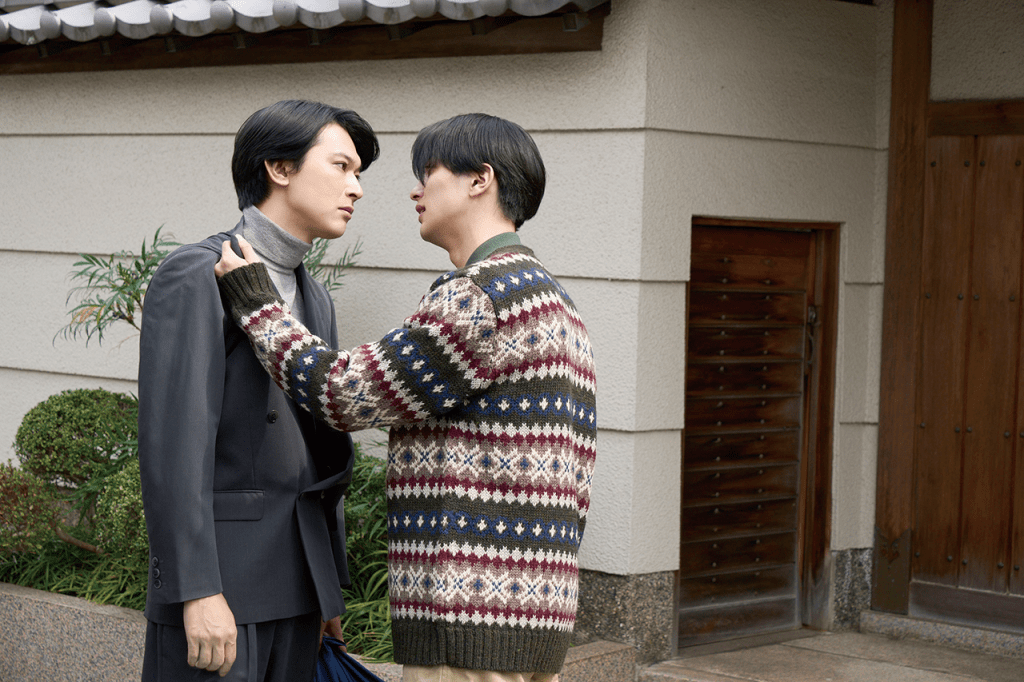
Avoid the temptation to compare this delicately paced Japanese drama to something like Marty Supreme. Kokuho is doing something more textured and has plenty to sustain its near three-hour runtime: Kikuo’s tempestuous relationship with Shunsuke (Ryusei Yokohama), heir to the Tanba-ya kabuki house where Kikuo trains; the weight of bloodline and tradition; and the quiet but cutthroat politics of kabuki, which eeriely mirrors the Yakuza life Kikuo could have led.
As a performer, Kikuo is chillingly good. We watch him grow, train, and excel, but despite spending years in his company, he remains out of reach. Internalisations are under-explored, making it difficult to fully invest in his triumphs or setbacks. Most disappointingly, life just happens to Kikuo; therefore, even with his clear passion and talent, it’s hard to root for him in the same way we do for others—particularly Shunsuke.
The film plays beautifully with nepotism through Shunuke, who doesn’t take his birthright seriously until it’s threatened. Instead of fighting a losing battle, he steps back, puts in the work, and returns transformed. Whether that transformation is genuine or simply the kabuki world reasserting its preference for lineage and status quo, is left open. Either way, his arc feels earned and dynamic and, ultimately, more affecting than Kikuo’s.
When it comes to the relationship between the two men, the film carries a level of ambiguity that could be seen by some as possibly romantic. It’s never made explicit despite a few heated moments, but the implication feels intentional, especially when paired with the decline in how kabuki is percieved over the decades. There’s a striking moment where Kikuo is beaten by drunken men who see him not as a performer but as a cross-dresser. It’s a brief but effective reminder of the disconnect between the art form and the world around it and adds a quietly progressive layer to a film otherwise rooted in tradition.
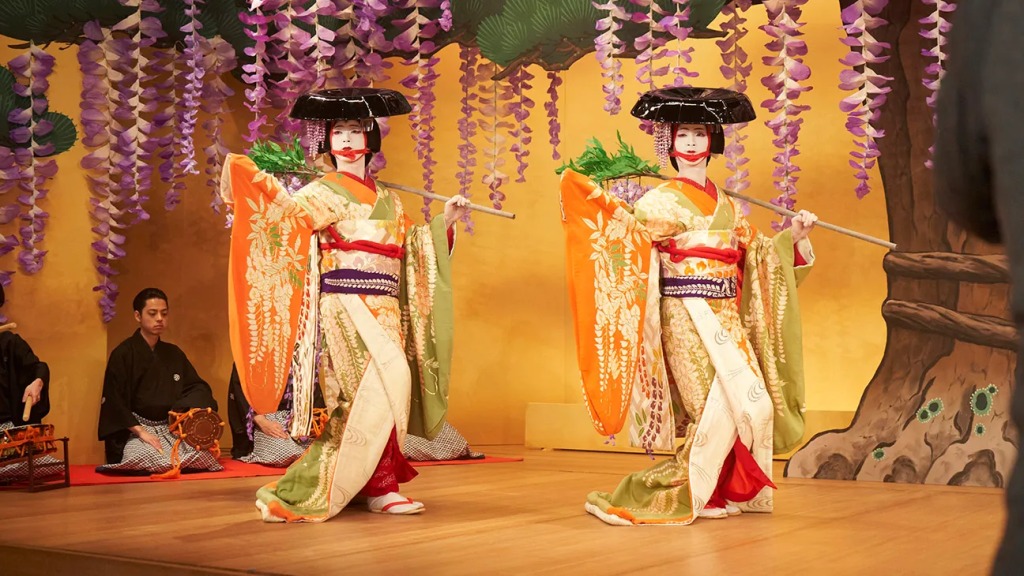
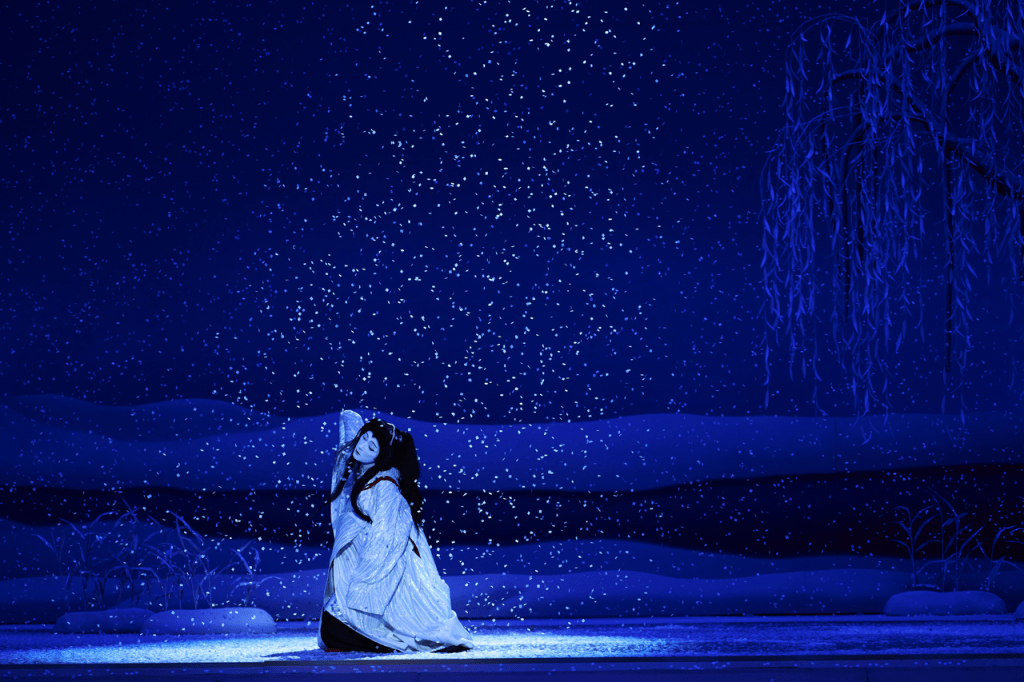
It’s impossible to talk about Kokuho without mentioning the vibrant costumes, art of make-up and performance sequences which punctuate the film. Snippets of plays such as Wisteria Maid and, in particular, The Love Suicides at Sonezaki elevate the emotional weight of the film where the narrative consistently holds back. Through these moments we begin to understand the skill and the sacrifices kabuki actors make and why they’d risk everything to be out on that stage.
For a story centred on such a rich and expressive tradition, the filmmaking itself rarely matches that energy. Visually the film feels surprisingly restrained, with compositions that favour functionality, leaving the performances to carry most of the aesthetic weight.
In its exploration of tradition, discipline, and artistic legacy, Kokuho is compelling in theory and occasionally in practice. Kikuo’s pursuit to become a national living treasure is a road with few bumps and no personal sacrifices, making it hard to fully champion his pursuit despite his undeniable talent. The audience is left on the outside looking in and wondering what is going on behind the curtains.
If you haven’t already, you can subscribe to Just Jen’s Reviews for relatable film reviews straight to your inbox.



 Film Reviews & Movie Analysis
Leave a comment