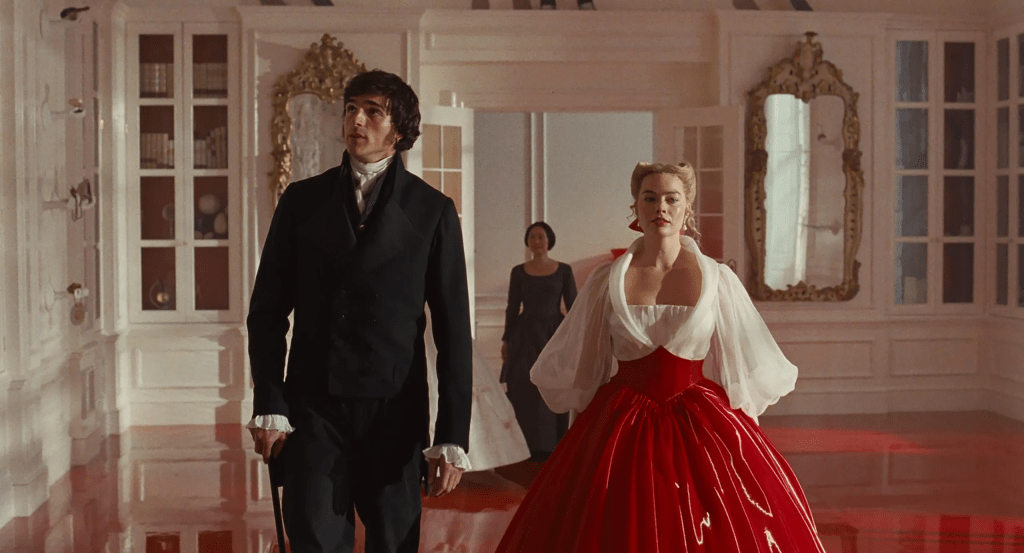
In her adaptation of Emily Brontë’s gothic classic Wuthering Heights, Emerald Fennell reimagines Catherine and Heathcliff as star-crossed lovers across the class divide who give in to their passions across the foggy Yorkshire moors.
Visually, Wuthering Heights is incredibly interesting. The architecture alone tells a story: the contrast of Cathy’s ancestral home, Wuthering Heights (stone, grey, sharp, dark, dangerous), with the nouveau-riche excess of Thrushcross Grange (smooth, slick, tacky, bright). The costumes – rose-coloured glasses, a gauzy shimmering gown, endless corsets – sit against the choking fog and the jutting rocks of the moors. We’re even treated to a dramatic burst of red sky as Heathcliff giddy-ups on horseback, confirming this critic’s theory that Yorkshire is an allegory for hell.
The opening scene is testament to this. There is a hanging and everyone is excited — which is true to the time, as people had a macabre fascination with watching their fellow townsfolk hanged. What they didn’t do, however, was fornicate in the streets after getting hot and bothered by the swinging corpse, as they do in Fennell’s version of Yorkshire.
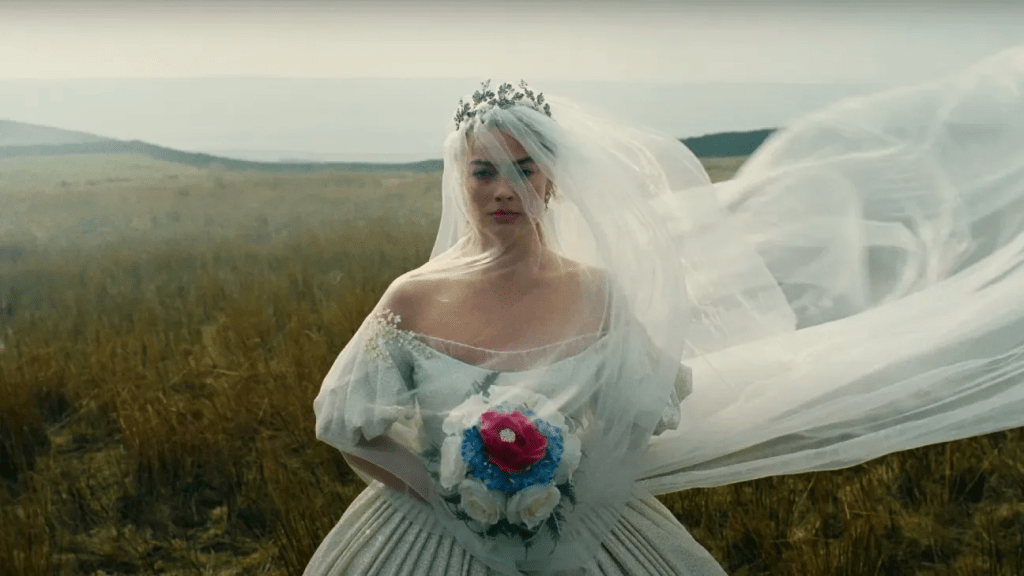
There are, in fact, a number of questionable scenes — from the practicality of Cathy (Margo Robbie) walking alone across the moors in her wedding dress (as stunning as the shot looks) to Isabella (Alison Oliver) enjoying a submissive relationship with her new husband. And we’re not talking metaphorically submissive: we’re talking collared and barking like a dog.
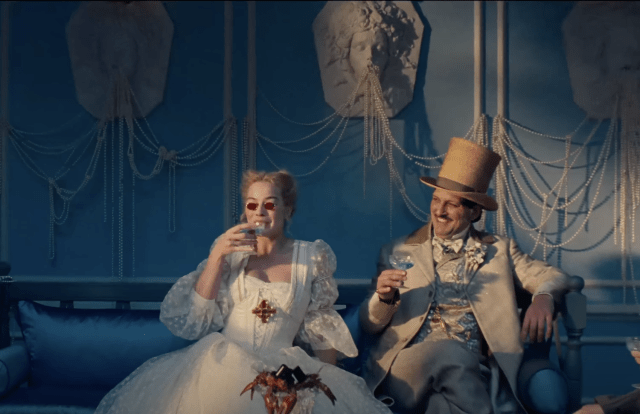
Though Wuthering Heights certainly gets points for trying, there is no real cohesiveness between the stylistic choices. The music switches between an apt, haunting Celtic-inspired ballad and a far less apt pop-funk sound. The set design jumps from Wes Anderson to Tim Burton — the latter particularly springing to mind with the stop-motion, hair-braided title sequence.
Streamlining a classic is a bold move. In some cases it works: Nelly (Hong Chau) becomes the bitter, puppeteering bastard child of a nobleman, and Earnshaw (Martin Clunes) plays the role of son through father. All of this allows the film to focus on Cathy and Heathcliff (Jacob Elordi) and the hell they’ve created for themselves in a doomed loop between Wuthering Heights and Thrushcross Grange.
Unfortunately, there is no substance beneath their surface-level mutual attraction. They go from friends to enemies, back to friends, back to enemies, and then lovers — repeatedly. The emotional beats repeat rather than escalate, and the central relationship simply isn’t gripping. Despite the yearning and hands clamping erotically over eyes and mouths, Cathy’s and Heathcliff’s chemistry is non-existent.
The film’s blatant disregard for chastity removes one of the novel’s central tensions. If repression is no longer the obstacle, then why not simply get together as teenagers? Without that friction, their longing feels performative rather than tragic and it probes the question: At what point is it no longer an adaptation and merely something “inspired by”?
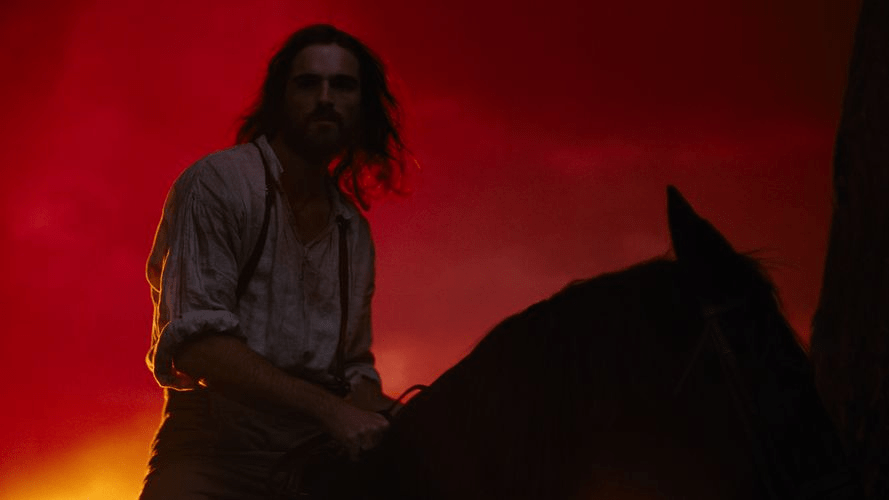
Emerald Fennell’s “Wuthering Heights” is a visually striking, intermittently interesting film that chooses provocation over depth — and in doing so loses the brutal, haunting inevitability that makes Brontë’s novel endure.
Granted, for an adaptation of a classic, it pushes certain boundaries to appeal to audiences who perhaps aren’t watching period dramas because they don’t feature modern music, sensibilities, or Pinterest-able wardrobes. Fennell throws everything at the wall to see what sticks – corset lifts, voyeurism, romps across the moors, and public orgies – but somewhere along the way she left out Wuthering Heights.
Thanks for reading—what did you think of “Wuthering Heights”?
Don’t forget to subscribe if you’d like future reviews straight to your inbox.



 Film Reviews & Movie Analysis
Leave a comment