
Alfonso Cuarón’s Y Tu Mamá También takes viewers on a journey through an unseen Mexican landscape, following two teenage friends on the cusp of adulthood. Their life-changing road trip with an older woman forces them to confront their desires, identities, and the fleeting nature of youth.
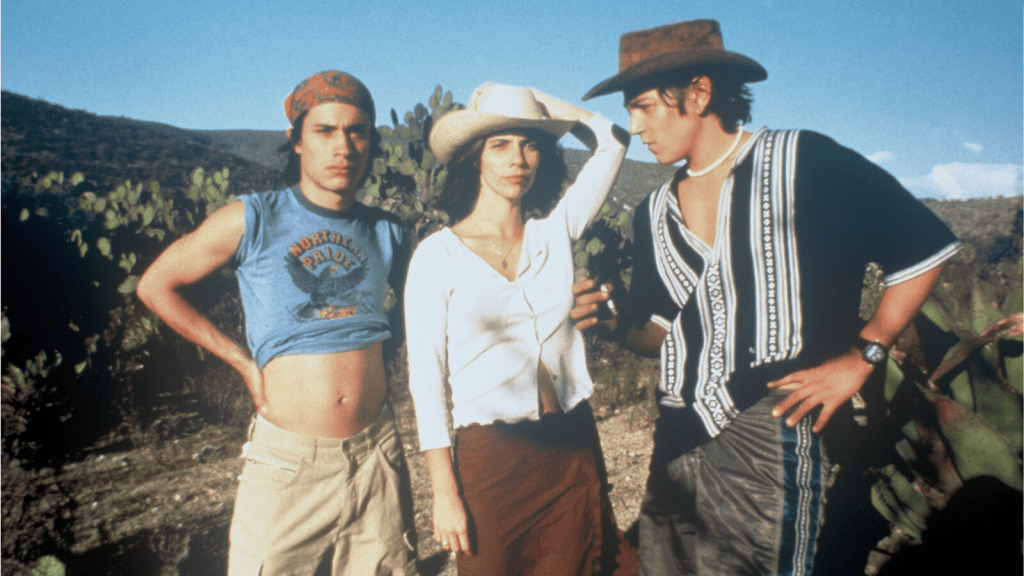
If you can’t stand ‘crude teenage boy humour’, I implore you to push past the first 20 minutes of Y Tu Mamá También. The film’s title, which translates to And Your Mother Too, is not just a throwaway joke between best friends Julio (Gael García Bernal) and Tenoch (Diego Luna); it also reflects the older, more experienced woman who upends their lives and test their friendship, Luisa Cortés (Maribel Verdú).
Julio and Tenoch come from different socio-economic backgrounds, yet they ignore their class disparities, masking their anxieties with sex, drugs, and self-indulgence. Their friendship is intense but unsustainable, and over 106 minutes, we witness the slow erosion of their bond.
At the forefront, Cuarón captures a crucial turning point in their lives—one that hinges on sexual exploration and maturity. But beyond the personal drama, the film subtly weaves in Mexico’s political and sociological climate, adding depth and contrast to the boys’ self-absorbed world.
The film is often uncomfortable to watch, particularly in its portrayal of sex, but this discomfort enhances the film’s raw authenticity. Y Tu Mamá También isn’t just about sex, it’s about the impermanence of youth, the illusions of friendship, and the inescapable passage of time.
What ties the movie together is the haunting omniscient voiceover, an almost indifferent narrator whose detached tone acts as a harbinger of change. It reminds us that this summer of freedom exists in a bubble, one that was always destined to pop.






 Film Reviews & Movie Analysis
Leave a comment