
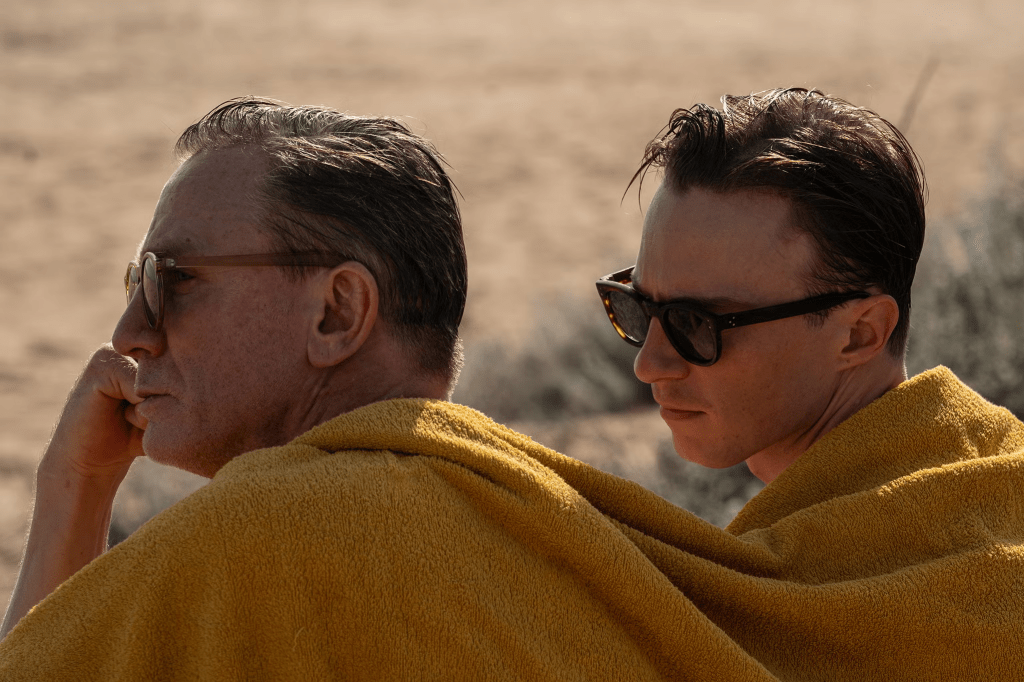
Adapted from William S. Burroughs’ semi-autobiographical novella, Queer (2024) follows Lee (Daniel Craig). Living in post-war Mexico, Lee wrestling with loneliness and a desire for human connection.
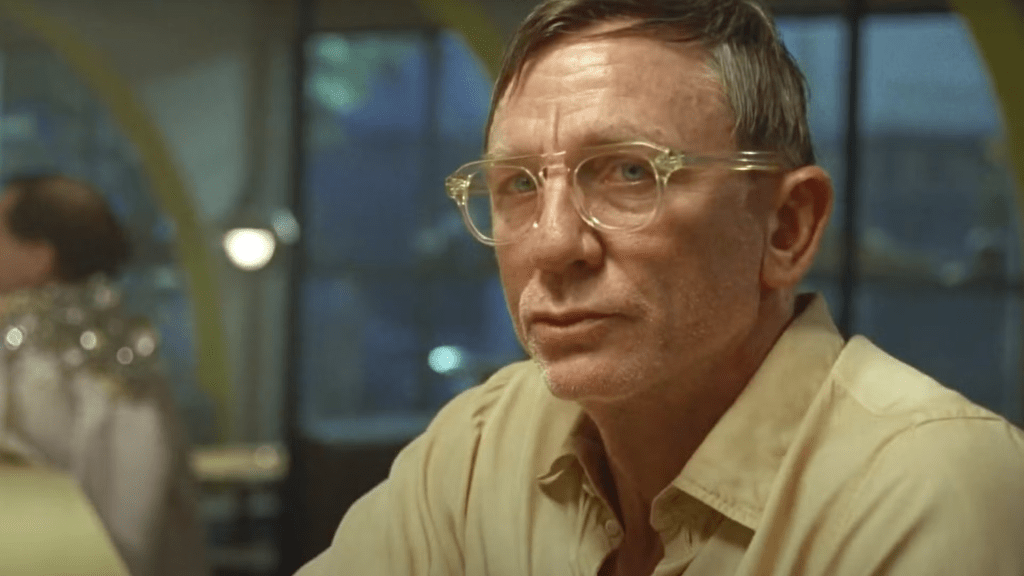
You might not directly relate with Lee’s external traits – I, for one, am not a middle-aged homosexual white man in post-war Mexico. However, Lee’s internal struggles are entirely universal. Director Luca Guadagnino does a phenomenal job of extrapolating the movies key themes of loneliness and desire. In the early portion of the movie we see Lee wandering around Mexico constantly searching for someone to spend the night with. When he finally finds someone its fleeting and its achingly clear he craves more.
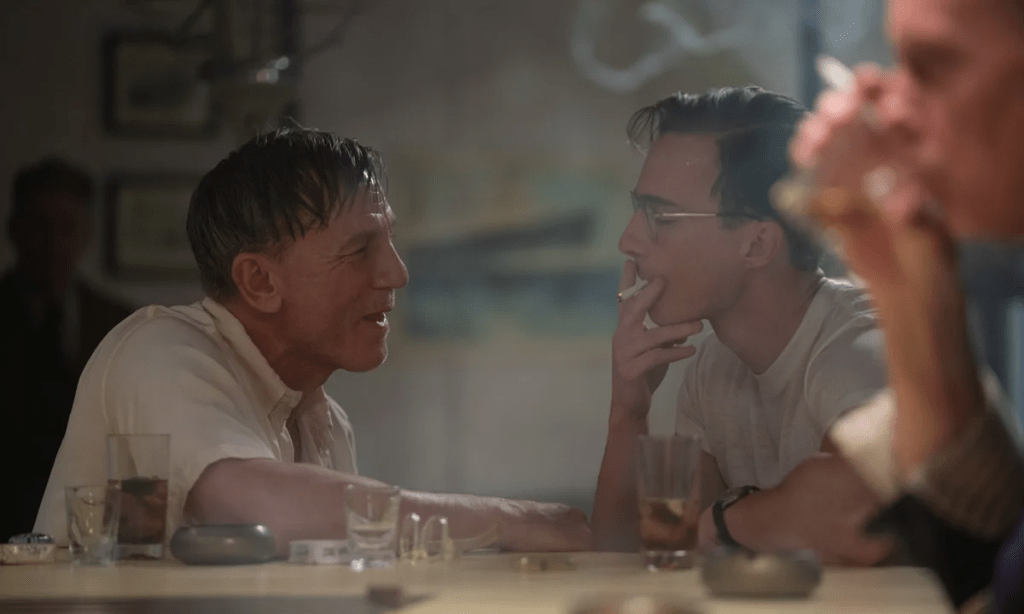
Eventually, Lee does find his special someone. Kind of. Lee’s journey with his love interest Eugene (Drew Starkey) is especially painful to watch at times. Lee consistently makes an ass of himself, and slides into grovelling desperation, all to get this aloof young man to so much as glance in his direction. It’s sad to watch because the mirror it holds up to our own lives, the lengths we’ve gone to, to obtain the unobtainable is flinchingly honest.
Daniel Craig’s transformative performance is the standout of Queer. Most of us know Craig for his commanding and roguish presence as James Bond, or the calculating Benoit Blanc from Knives Out. Here, Craig completely sheds that persona, disappearing into the role of Lee. He is unrecognizable, not just physically, but emotionally. His portrayal captures the vulnerability and desperation of a man at odds with himself, allowing the audience to see beyond the character’s prickly exterior and into the depths of his pain and yearning. It’s a subtle and layered performance that redefines Craig’s capabilities as an actor.
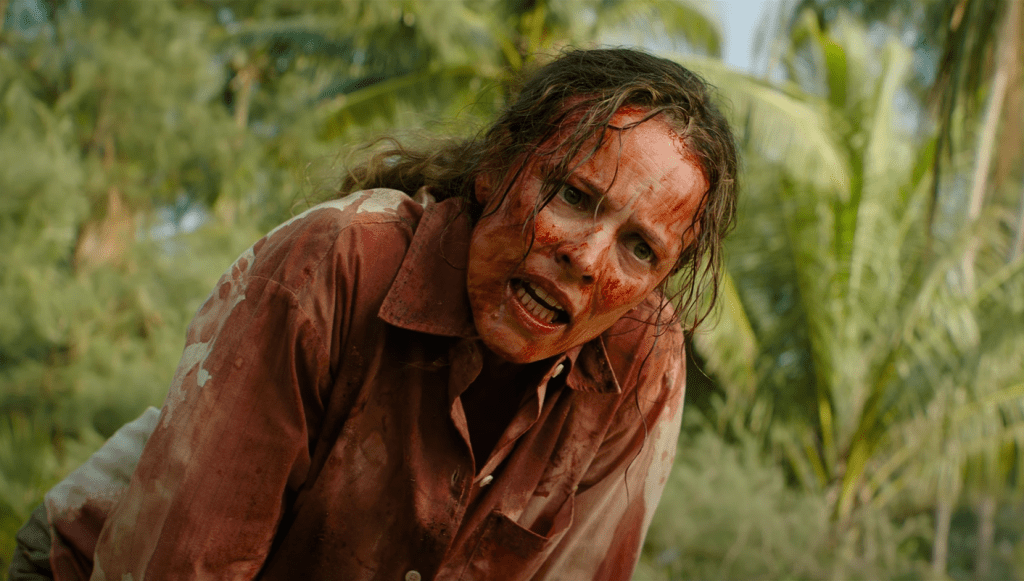
There are two main issues that I found with the film. Firstly, the surprising and often random use of magical surrealism. It’s significance is hard to pinpoint and its use is forgettable. For example towards the end of the film Lee who is in a jungle, then drops from the sky and lands on a beach. It was used as a form of transition and although it compressed time, it’s not something that the film had done before and it didn’t further plot or character.
The second issue for me was the ambiguous note the movie ended on. On the one hand, it mirrors the uncertainty that runs through the core of the movie. On the other hand it felt like a missed opportunity to conclude Lee’s emotional arc.
Still, Queer is a haunting exploration of identity and isolation, elevated by Guadagnino’s artistry and Craig’s unflinching performance. This is not a film for those seeking a traditional narrative, as it dives into the existential frustration of not knowing what the future holds with quiet intensity. If you are willing to sit through the movie then, Queer offers a raw and resonant look at what it means to be human.
What did you think of Queer?



 Film Reviews & Movie Analysis
Leave a comment