
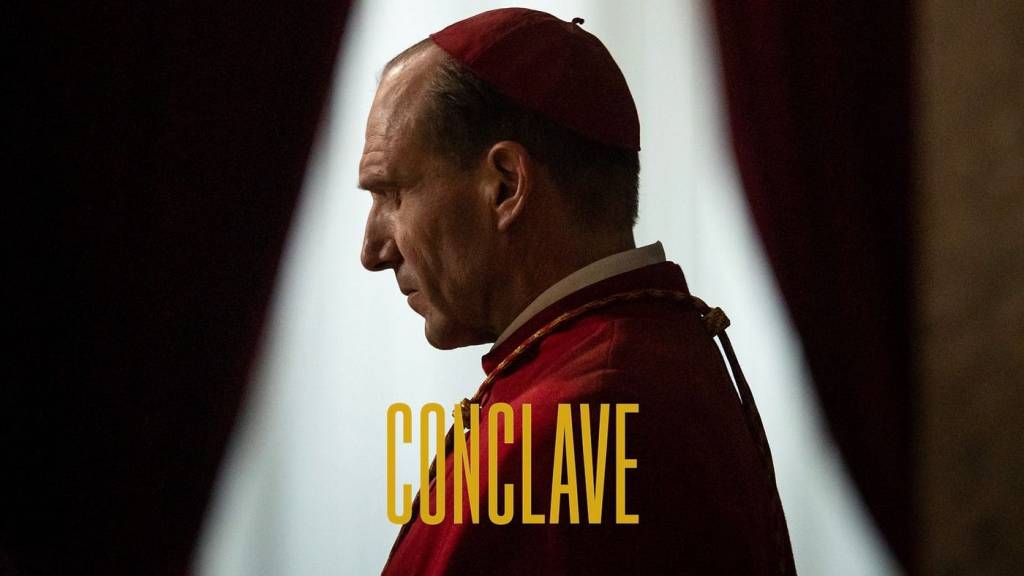
When the Pope dies, the Vatican is thrust into an enduring and clandestine ritual: the conclave. Cardinals from around the world gather as one to decide who will ascend to the papacy, but coming to a unanimous decision is far from easy. Directed by Edward Berger, Conclave dives into a fascinating clash between politics, power, and piety as the line between faith and ambition blurs.
I can honestly tell you that before Conclave, I had given precisely zero thoughts into how someone becomes Pope.
Go figure.
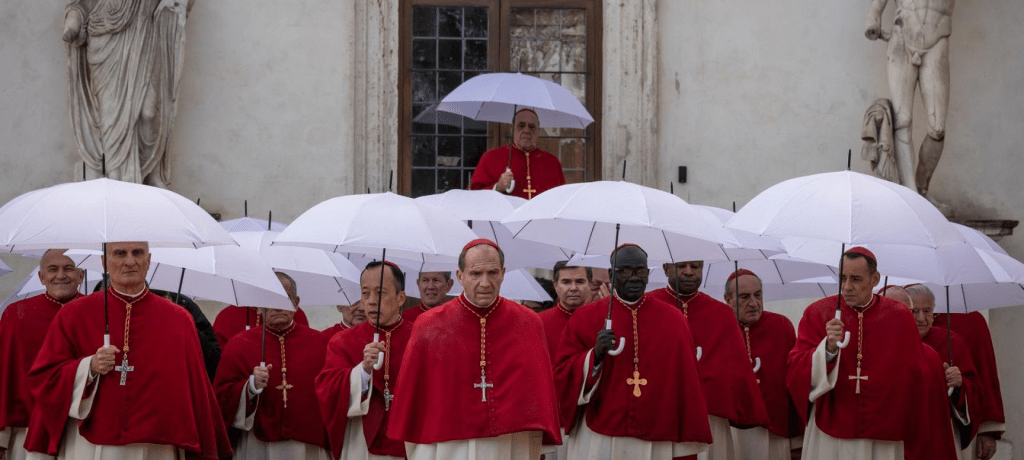
Despite this, I was instantly transfixed. The story brilliantly explores the machinations behind the sacred ceremony: the alliances formed in whispers, the quiet power plays, and the unpredictable moments that sway tides. It’s effective in its simplicity, as the decision for the papacy comes down to a majority vote from the gathered cardinals. We observe voting numbers climb and plummet as cardinals crash in and out of favour with one another. Mostly we are constantly reminded that beneath their scarlet robes, they are but mere mortal, and irrevocably flawed, men.
Adding to the film’s allure are the standout performances of its ensemble cast. Ralph Fiennes brings a simmering intensity to his role, expertly portraying a man weighed down by both duty and doubt. John Lithgow commandeers his role as the most likeable figurehead cloaked in unconfirmed duplicity, while Lucian Msamati seizes attention with his portrayal of a cardinal grappling with moral conflict. Finally, Stanley Tucci surprises with moments of wit and levity that provide a much-needed breath amidst the heavy drama. Together, the trio delivers a rich tapestry of angst, greed, and occasional humour that elevates the film beyond a straightforward political thriller.
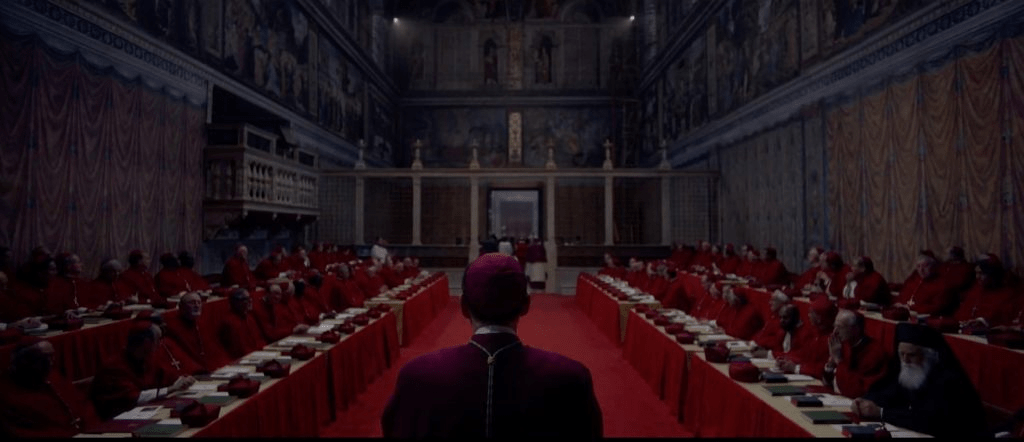
What makes Conclave even more gripping is its claustrophobic setting. The entirety of the film takes place within the confines of the Vatican. From the grand hall where votes are cast to the bland and almost clinical quarters where the cardinals sleep. The cardinals are sequestered from the outside world and the tensions rising unbeknownst to them at their doorstep. This enclosed nature is not just a backdrop but a character in itself, heightening the drama and binding the audience to the same restrictions faced by the conclave.
Visually, Conclave is nothing short of stunning. Its cinematography borders on theatrical, with every shot meticulously composed to highlight the grandeur and solemnity of the Vatican. The interplay of light and shadow echoes the film’s central themes of truth and deception, while the fluid transitions between English, Italian, and Latin lend authenticity and texture to the narrative. It’s a feast for the eyes and ears, immersing the viewer in a world that feels both timeless and lovingly constructed.
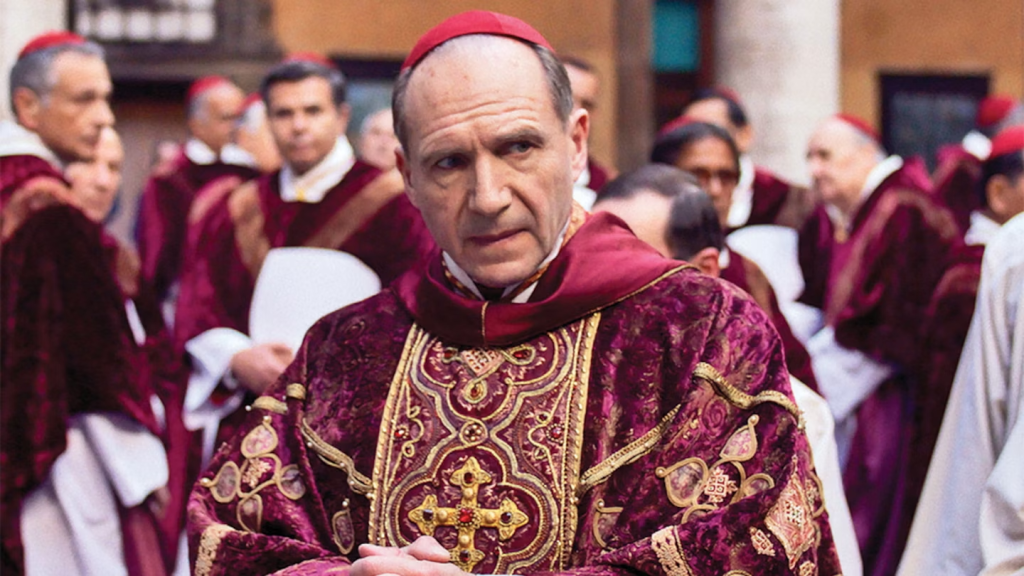
Ultimately, Conclave is a triumph. It takes a story steeped in tradition and infuses it with the urgency of a modern political drama. A bonus point for me is that Conclave does what so many other films surrounding religion consistently fails to do. It does not seek to villainize, ridicule or humiliate. The intent to educate, inform and also breathe the inescapable wash of modernity to an archaic form sets this film miles apart.
I freaking loved this film, so much so that I feel like my review is left wanting. I shall be saying a prayer that Conclave cleans up during the upcoming awards season. With its compelling story, masterful performances, and breathtaking visuals, Conclave sets the gold standard for what a prestige drama should be.
Can I get an Amen to that?
What did you think of Conclave?
Watched during BFI London Film Festival 2024


 Film Reviews & Movie Analysis
Leave a comment