
Jesse Eisenberg and Kieran Culkin are a grief-filled comedic duo, and it’s hard to know if you want to laugh, cry or scream as the mismatched pair embark on a pilgrimage to Poland to honour their late grandmother.
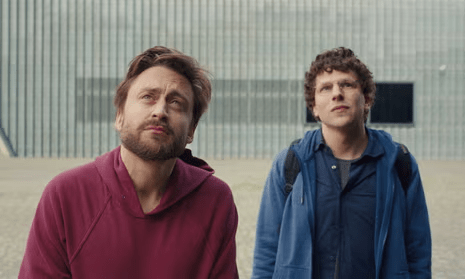
There’s a question early on in the movie. David (Eisenberg) and Benji (Culkin) introduce themselves to the rest of the tour group. Everyone else has given their reasons for coming to Poland and what they’re hoping to get out of the trip. Benji takes the lead and explains that he and David were born three weeks apart, then jokes to the group: Guess which one of us is older?
Nobody guesses, the boys don’t answer, and everyone moves on.
Except for me, obviously, who became obsessed with trying to work out which cousin was older based on their ‘sibling’ dynamics. Three weeks is barely anything, however as a society we can’t help but having an ingrained stereotype of characteristics based on everything from race and religion to the order we were birthed, and these traits satisfy a self-fulfilling prophecy.
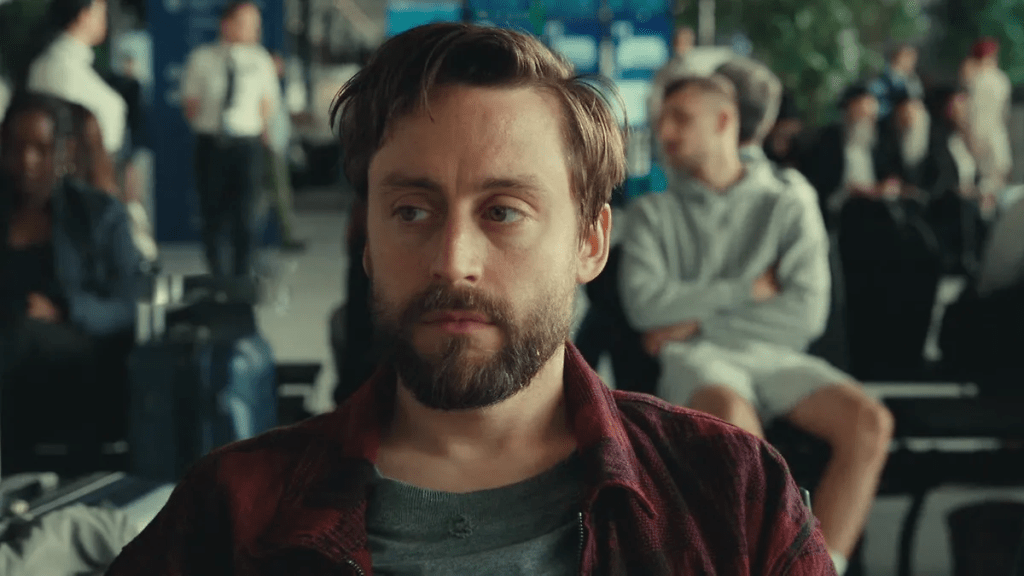
Eisenberg is fitting as the responsible, tightly-wound, slightly anxious, people pleasing David. He is comic in the overzealousness in his pursuit of order and the management of his cousin Benji. At the start of the movie, we watch David leave his cousin fretting voicemail after coddling voicemail, all of which go unanswered. When David gets to the airport and realises Benji has not only arrived before him but also checked in and picked David up a yoghurt. In a fleeting look, David is unable to compute the reversal of their roles.
Eisenberg, who wrote and directed A Real Pain, doesn’t fall into the hubris other multi-hyphenate creatives do, by making themselves centre stage. His performance is effective in its understated and repressive nature, and though his character David has his moment of professed frustration to an awkwardly rapt gaggle of strangers, it is Culkin that truly shines as the chaotic Benji.
At odds with his (younger?) cousin David, Benji externalizes the highs and lows of his grief. Grandmother, Dory, was his favourite person. They shared a connection of an abrasive honesty in their personalities and a world view they imposed onto others. Without her, Benji, who is mellow, enigmatic and personable – all traits David covets, is also untethered. As Benji spirals, he pulls those around him into his vortex; the awkward eye averting travel party, and of course David, who rarely flinches at the shrapnel Benji projectiles when he explodes.
Although there is a clear opposition in how Benji and David handle their loss; one with prescription medication the other with self-prescribed, one pushing theirs down to make room for the others, there is an innate non-verbal similarity. They never sit down and talk about what they are feeling with each other, instead they attack each other’s methods of coping while defended their own.
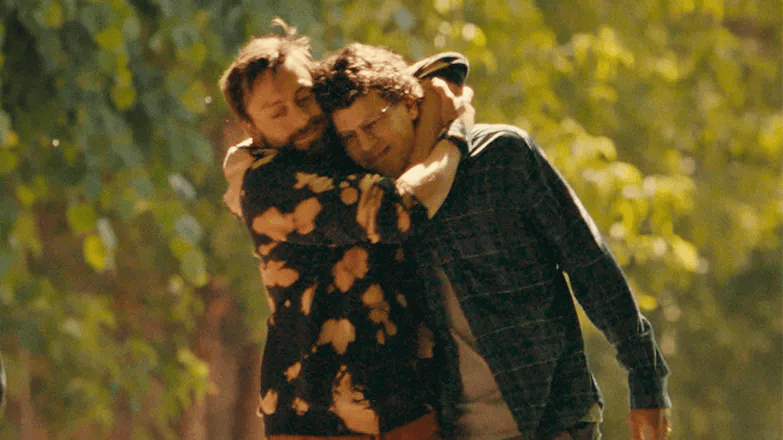
The cousins snip and snipe, but their grief is put into perspective as they traverse through Poland in a minibus. What works incredibly well is the vibrancy of Poland. The blue skies, rolling green hills and the sun kissed buildings that are given centre stage with lingering static shots as if they were posing for a portrait. The country makes for a harsh and beautiful landscape for the comedy drama, enhancing the compressed nature of the story, by quietly baring its own scars.
At a preserved concentration camp, Benji lets out everything he is feeling, and David, stood behind him in silent sentry, internally grappling with the difficulty of being in the environment, places a comforting and solidarity (older sibling?) hand on Benji’s shoulder.
A Real Pain, does this magical thing of giving form to the characters’ emotions from David trying to fix things and Benji trying to break them, whilst simultaneously withholding substance. Neither of the other names what they are going through, and so we have no choice but to transfer our preconceived notions of age dynamics and its effect on how David and Benji process grief and its five stages.
The film divides us by giving two easily relatable viaducts of emotion through Benji and David, however it doesn’t profess a right or wrong way to handle grief, instead it emphasises its individualism through the cousin’s polarising personalities. How it affects those around them and most importantly themselves. There is a brilliant if not slightly trite circularity to the film as we watch one cousin, post trip, move to the next stage of the grieving and healing process, while the other remains on the conveyor belt.
At its core, the film solidifies its message: everyone handles grief differently, and sometimes, for the people it eats away at and for those around them, it can truly be a real pain.
Have you seen/are you planning to see A Real Pain?



 Film Reviews & Movie Analysis
Leave a comment