

Discovering the humanity behind the lens
Speaking with a journalist about the personal and the historic pictures she’d taken over the course of her life, Lee tells the story of prolific war photographer Lee Miller. The movie chronicles her journey from a former model turned amateur photographer, to the eyes of Britain, taking pictures of the unseen, on the front line during the second world war.
The titular character Lee Miller is effortlessly played by Kate Winslet, with the biopic also starring Andy Samberg as David E Sherman, Alexander Skarsgård as Roland Penrose and Josh O’Connor as Anthony.
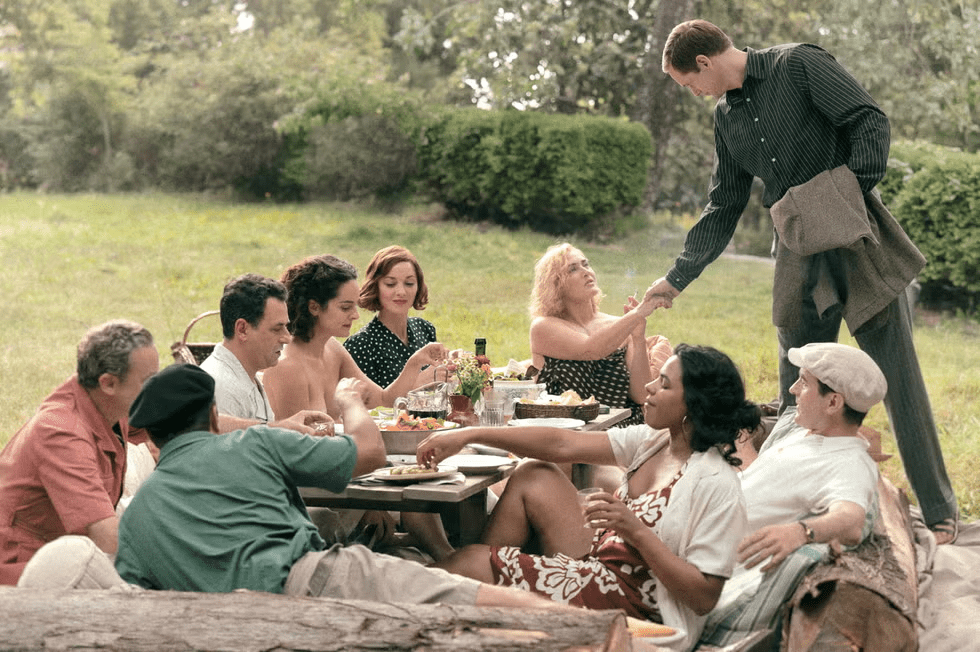
When we meet Lee, she is young, hungry and restless, and has already broken away from the societal projection of what it means to be a traditional woman. Lee is quick to explain that she liked to drink, have sex and take photographs, and she was very good at all three. Instantly, our conception of this woman who is bright and fearless is formed. The film cements her as untraditional and free by the casual way she takes off her shirt and sits exposed with a group of friends.
It’s impossible not to be in awe of this confident woman who goes after what she wants and gets it. Lee very early on gets the guy; Roland Penrose, a considerate and dotting Englishman and artist, but she also gets the job.
Settling in England as the second world war brews in mainland Europe, Lee becomes a photographer for Vogue Magazine. The movie does a fantastic job at allow us to take pride in the fashion magazines contribution to the war efforts under the sturdy reigns of its Editor, Audrey Withers (Andrea Riseborough).
Audrey and Lee are two peas in a pod, their friendship is forged in the harsh realities of war and cobbled together from the wreckage. Through Audrey, we glean fragments of another woman’s life; a woman who said no to children, and who used the modal of Vogue Magazine, a publication others saw as a “silly” fashion magazine to tell and to share the news with women across the world.
The pictures Lee takes for Audrey, for Vogue, for herself, for the world, go beyond curiosity. Throughout the movie we watch as that earlier frivolous restlessness takes shape and aims in a singular direction: Sharing the truth, no matter how unpleasant.
We begin to live and breath by the images Lee captures in turbulent, sensitive and tragic moments. Breathing in to the sound of the mechanical wind of Lee’s Rolleiflex and holding it until we hear that subtle, almost silent confirmatory click of the shutter button.
There is a beautifully haunting moment in the film that gives weight to that moment of silence for an image captured. Lee takes an image in the past, and we flip to the present to view the processed image in the hands of her interviewer, Anthony. The silence extends as the camera holds on a devastating scene at a concentration camp.
Lee’s negatives, go directly to Audrey, whose work, like Lee’s, was behind the scenes.
She was the invisible hand stitching together words, matching them with imagery and pushing against the mighty roar of the establishment she worked for. Like Lee, Audrey didn’t believe women should be left behind or kept out of the narrative or conversation, and she wielded her responsibility to make a global impact.
Although we only get glimpses of Audrey Withers throughout the movie, I, for one, would not be surprised to be watching a biopic in her name, very soon.
There is a great moment in the movie where Lee, having been out on the road, behind enemy lines, caked in dirt and mud, receives a package from Audrey. Pristine and luxuriously cut, clean underwear.
It’s a poignant moment in the movie that reminds us; Lee isn’t “trying to be a man”, she isn’t trying to do “what men do.” Lee is simply doing what she can do.
The movie is not about stripping Lee of her femininity as she goes from “tits and ass” ex-model to scrubby war photographer, it’s the opposite. The film constantly reminds us Lee is a woman. It reinforces it in the longing gaze of her colleague David. Normalises it by her acceptance into male only space, and is constantly saying that her womanhood is not something to be emasculated by, or get your knickers in a twist over.
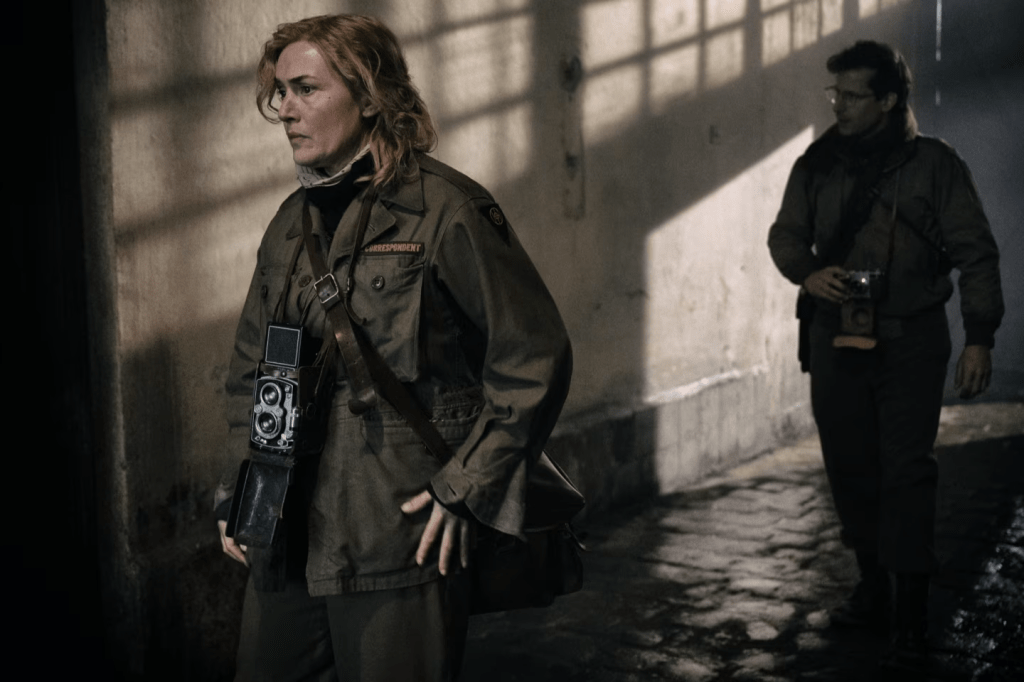
Ironically, this movie excels is in its portrayal of women, and falls flat with its male characters who detract from Lee’s story.
The film is framed anecdotally, with an older version of Lee looking back at her life and her work, answering questions posed by a journalist, Anthony. The two of them make a deal at the start; Lee will tell him about her life if he tells her about his.
Anthony does so once, when Lee suddenly says; “Tell me about your mother”. The statement and the sudden grounding in the present, a space that the movie had only briefly settled, jolts. We itch to get back to Lee’s story and frustratingly wonder, who is this man to take away from the narrative of the great Lee Miller?
Anthony’s role in the narrative is clear at the end of the film, however the omission of his involvement in the story ironically took away from the otherwise clear, open and exposing theme of the movie.
Typically, especially in war era movies, men are on the front line and the women are tending home and minding children. Lee subtly reverses those roles. Her husband, Roland, sits at home worrying and waiting for Lee to return, and her colleague, David, often follows her lead. David holds up mirrors and flash bulbs to allow her images to be better lit, and gives her a leg up to go ahead of himself.
Like the character, the movie centralises, Lee is a compelling tale, framing the life of a woman whose story deserves to be at the forefront of modern history, flawlessly guided by Kate Winslet.


 Film Reviews & Movie Analysis
Leave a comment