
How The Amazing Spider-Man keeps the return to the franchise both familiar and fresh.
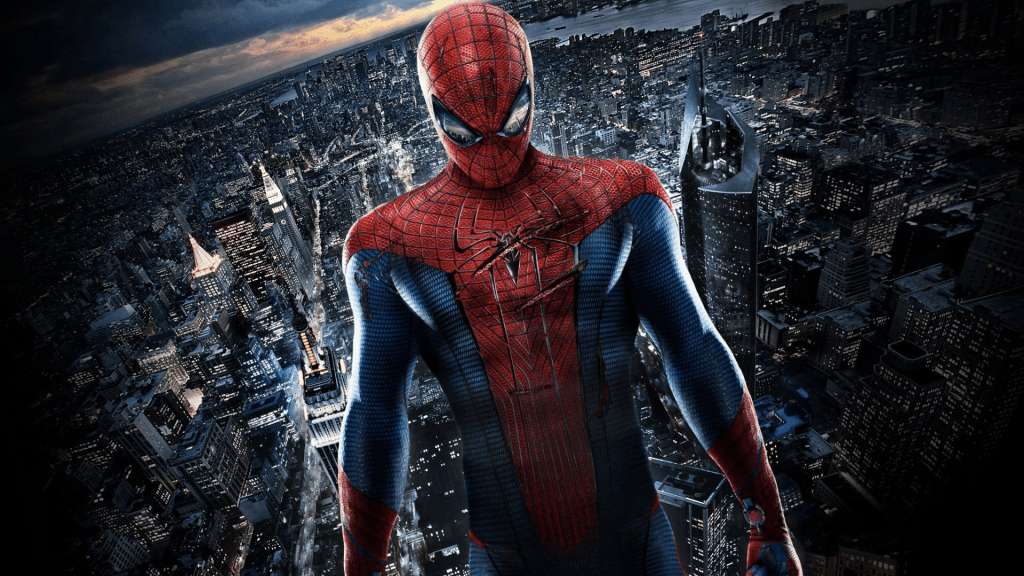
If you missed out on the deep dive into Sam Raimi’s Spider-Man trilogy, check out Unmasking Spider-Man: Are Powers and Responsibility the True Measures of Heroism? Then, Unmasking Spider-Man: Identity and the War Within and finally Unmasking Spider-Man: How Too Many Plots Spoil The Broth.
There were plans for a Spider-Man 4 with much of the same team coming back, including Tobey Maguire and Sam Raimi. However, after numerous rejected scripts, impending deadlines that couldn’t be met and fundamentally not finding a story that was worthy of returning to the universe, the big red reboot button got hit. Andrew Garfield answered the call to swing through the streets of New York, with Marc Webb coming in on to direct.
It’s important to note I loved Andrew Garfield as Spider-Man, and from a place of complete objectivity, The Amazing Spider-Man was a phenomenal reboot to the beloved film trilogy. Like Sugar, Spice and Everything Nice (and Chemical X), when it came to creating The Powerpuff Girls, there are certain ingredients that make Peter Parker, Peter Parker.
With only five years since the close of Sam Raimi’s trilogy, The Amazing Spider-Man found a way of giving audiences something they knew, and loved, while creating an original storyline and characterisation of a new Peter Parker.
One thing you know, but never think about, is Peter Parker being an orphan. We don’t often get the ins and outs of what happened to his parents, as it doesn’t affect Peter in the same way the early loss of his parents effects Bruce Wayne.
This is the first differentiation between the movie reboot, we meet Richard and Mary Parker and a young Peter right at the start. This creates an emotional connection to Peter, who is often compared to his father, and it contributes to the plot. There’s also a clever erasure to doing this, as it manipulates the viewer into seeing this Peter as the original, the one we feel like we’ve known since he was a kid.
Continuing with this idea that Peter Parker has a traceable timeline, is the introduction of Doctor Curt Connors (Rhys Ifans).
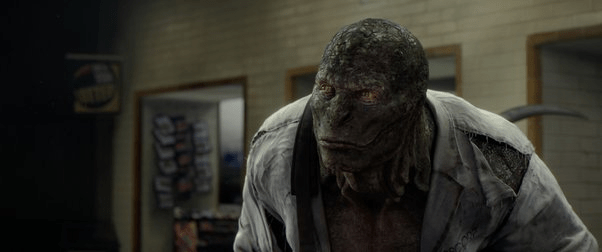
Doctor Connors marks a return to Spider-Man’s villain archetypes; the mad scientist. Doctor Connors is a good man trying to save the world, himself and his job and in an act of desperation, he goes too far. It was the same with Norman Osborn who became The Green Goblin to save his company and reputation, and Doctor Octavius who was trying to save the world. The Amazing Spider-Man puts a spin on this villain trope by putting Peter at the centre of Doctor Connors change.
Peter gives Connors a formula created by Richard Parker that closes the missing link in Connors work. This gives Peter a deeper sense of responsibility for stopping Connors.
Speaking of responsibility, can you talk about Peter Parker becoming Spider-Man without talking about Uncle Ben?
(Actually you can, but that’s for an upcoming retrospective, so for the time being we’re going to ignore that)
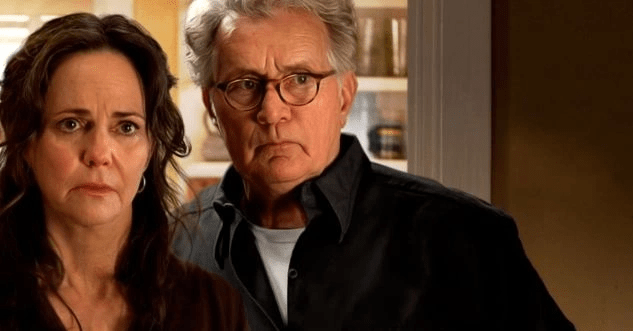
The death of Uncle Ben (Martin Sheen) is more emotionally fraught in The Amazing Spider-Man because the audience sees it happen. Then doubling down on the emotional intensity of the scene, the audiences witnesses Peter being unable to save his uncle. I cry every time.
Even though the events are similar; a thief, Peter had the chance to stop and chose not to. The paralleled lines “not my policy” and “I forgot the part where that’s my problem” and where these actions lead, there’s a fundamental antithesis. Maguire’s Spider-Man goes after his uncle’s killer, and Garfield’s Peter Parker chases down his uncle’s killer. It is only later, born out of safety and necessity, that Peter dons a mask.
This new Peter chooses to become Spider-Man, negating any reason for an identity complex down the line, as opposed to what we saw happen before with Maguire’s Spider-Man.
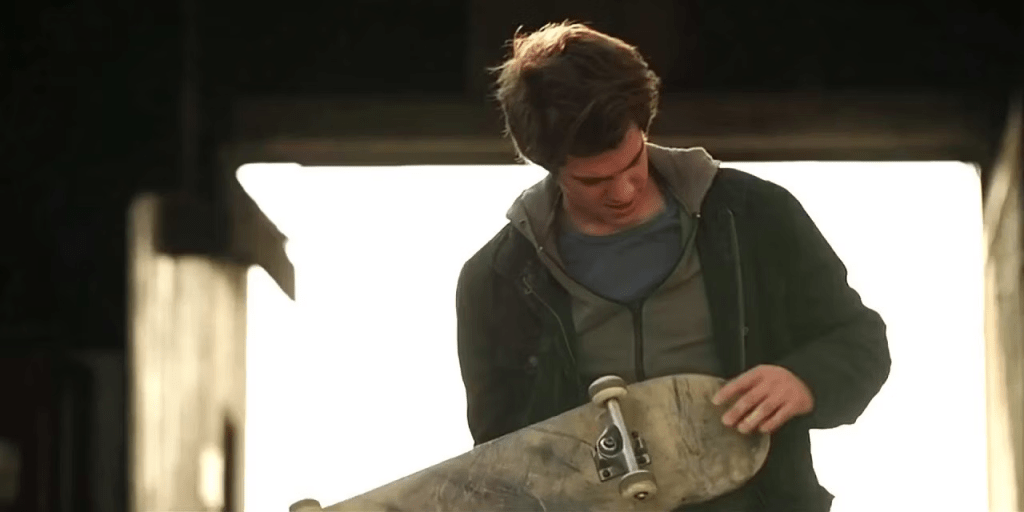
Peter Parker will never be the popular kid, but in the reboot he is not a loser, he’s a loner. Arguably similar in Peter’s lack of a core friendship group, hyper intelligence and being lost in his own world, the difference is that as a loner Peter has a voice. We watch as he stands up to Flash, his classmate, who is bullying another kid. Whereas in Raimi’s universe, Peter would be the one being bullied. It’s a subtle shift that gives the audience that closeness of character that we’d expect to see in Peter Parker while updating an overdone 90s era stereotype.
Webb who has directed numerous pop-punk and pop-rock music videos for bands such as The All American Rejects, Weezer, AFI and My Chemical Romance, poured the authenticity of being a grungy skater kid into his version of Peter Parker which refreshes him for a new generation.
Finally, a core theme we expect from Peter Parker/Spider-Man is sacrificing love. Maguire’s Peter did this with Mary-Jane Watson (Kirsten Dunst) at the funeral of Norman Osborn, and Garfield’s Peter continued the tradition. Following a funeral, he breaks up his girlfriend, Gwen Stacy.
The difference is that Maguire’s Peter chose to be selfless and Garfield’s Peter made a promise to stay away, from Gwen. Thus, we circle back to an overlapping theme in Spider-Man; The choices Peter Parker/Spider-Man makes and the consequences they lead to.

The Amazing Spider-Man didn’t only tweak Peter Parkers story, at times it completely flipped the script. This reminds audiences that the purpose of a reboot isn’t only to give them something they’ve seen time and again, it’s a chance to try something new.
Saying goodbye to Mary-Jane Watson and hello to Gwen Stacy (Emma Stone) is a major change of narrative. However, it is necessary to stop audiences playing compare and the contrast.
Different woman, different personality, different chemistry. Peter and Gwen didn’t have any of that, ‘girl next door’. ‘love triangle’. ‘longing from a distance’ malarkey. The audience gets to witness their first warm spark of respect develop into mutual interest. They understand the development of their relationship as Peter and Gwen become romantically involved and trust one another.
This trajectory leads into one of the major differences in the reboot; Spider-Man is unmasked…. He is also unmasked again, and then, unmasked once more for good measure.
This one might be hard to swallow because of the idea of a secret identity, but; been there and done that. Instead of making the Peter Parker/Spider-Man question a big relationship damaging burden, the band-aid is ripped off. And it works.
Revealing his secret early on brings Peter closer to Gwen, and it is a direct correlation to Spider-Man saving the city from Doctor Connors aka The Lizard. Peter sacrifices his secret to the very man who is hunting him; Captain Stacy. The film continuously justified its decision to lean away from Peter hoarding his secret identity, leaving room to create other mysteries.
Plus, let’s face it, the secret identity does little to protect the people loves from danger anyway.
The Daily Bugle is a constant in the Spider verse, and we see signs of the newspaper’s presence in The Amazing Spider-Man. But J. Jonah Jameson’s one-man mission to vilify Spidey pales in comparison to the NYPD’s determination to get the swinging vigilante off the streets. The loss of The Bugle isn’t felt, as the paper is there, ready to be utilized when the time is right.
Finally, The Amazing Spider-Man clearly lays out the path ahead (for what was meant to be more than one more film) by sprinkling in a narrative that related to an overarching storyline.
We learn that Norman Osborn is alive in this world, but he is dying and is seeking a cure. The arc isn’t concluded in The Amazing Spider-Man, leaving the window open to tap into that narrative arc in the future.
At the end of the movie, when Doctor Connors is in prison, a voice in the shadows asks if he ‘told Peter the truth about his father’ and Connors then shouts to the figure to ‘leave Peter Parker alone’.
Getting the audience riled up for a sequel is just good business, and when you’re rebooting a franchise, every little helps.
The Spider-Man comic book universe is large, intricate and complex with innumerable storylines to draw from ready to be adapted for the big screen. When companies press the reset button, audiences need a smooth handover, in order to keep them interested in the new world being created.
Much like the regeneration of a new Doctor in the British Sci-Fi series Doctor Who, it’s difficult to strike the balance between a character that is completely new and feels wholly familiar. Especially when it comes to retaining and expanding viewership. Thankfully, Andrew Garfield’s reintroduction as Peter Parker nails the transition.
The film carved out a space for itself by bringing forward less explored characters to keep the story fresh and by teasing out an overarching storyline to hook the audience into coming back to see what was in store for their new hero.



 Film Reviews & Movie Analysis
Leave a comment