
There Can Only Be One Narrative: The Protagonists Perspective
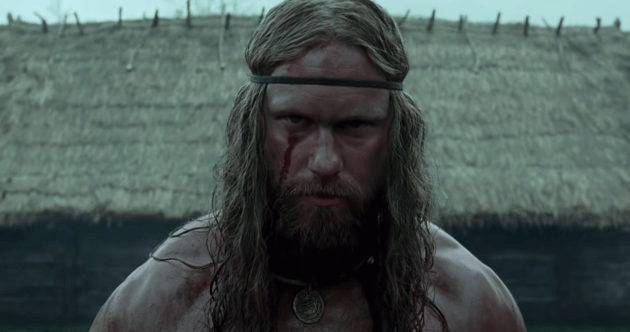
When a young Amleth witnesses his father’s murder at the hands of his uncle he makes three vows whilst fleeing the only land he’s known. To avenge his father, to save his mother and to kill Fjölnir.
It is several years later when Amleth (Alexander Skarsgård) now a hardened husk of a man, seizes the opportunity for vengeance. Disguising himself as a slave, he steals aboard a ship heading towards his self-imposed destiny to unburden his angry heart.

The Northman tells the circular and familiar story of revenge, however, for a film based on Vikings, it has an unexpectedly slow pace. The audience has the opportunity to whet their lips on some mandatory bloodshed early on, but once that comes to a close, it’s simply a slow-burning game of tactic and paganism.
To call it magic is an insulting simplification, but with magic, we have the tendency to want to believe. When it comes to religion, on the other hand, we become sceptical and look for reasons not to believe. It’s in that resisting pull between the two that The Northman creates its rules. When a He-Witch guides Amleth to Night Blade, the weapon he will use to kill Fjölnir, he fights a mental battle to obtain it, but the reality matches the warning and at dawn, the sword can do no damage.
There are other Norse beliefs that come into play that could be chalked up to coincidence – but equally, there are as many undeniable instances that can’t be overlooked as facts within the world.

Fact and fiction are separated by a wary line, and in film, as an audience, we are often led to believe in our protagonist’s version of the truth. For Amleth, it is that his beloved father, King Aurvandill War-Raven (Ethan Hawke) was brutally murdered by his brother Fjölnir (Claes Bang), who then captured his mother, Queen Gudrún (Nicole Kidman) and forced her to be his bride.
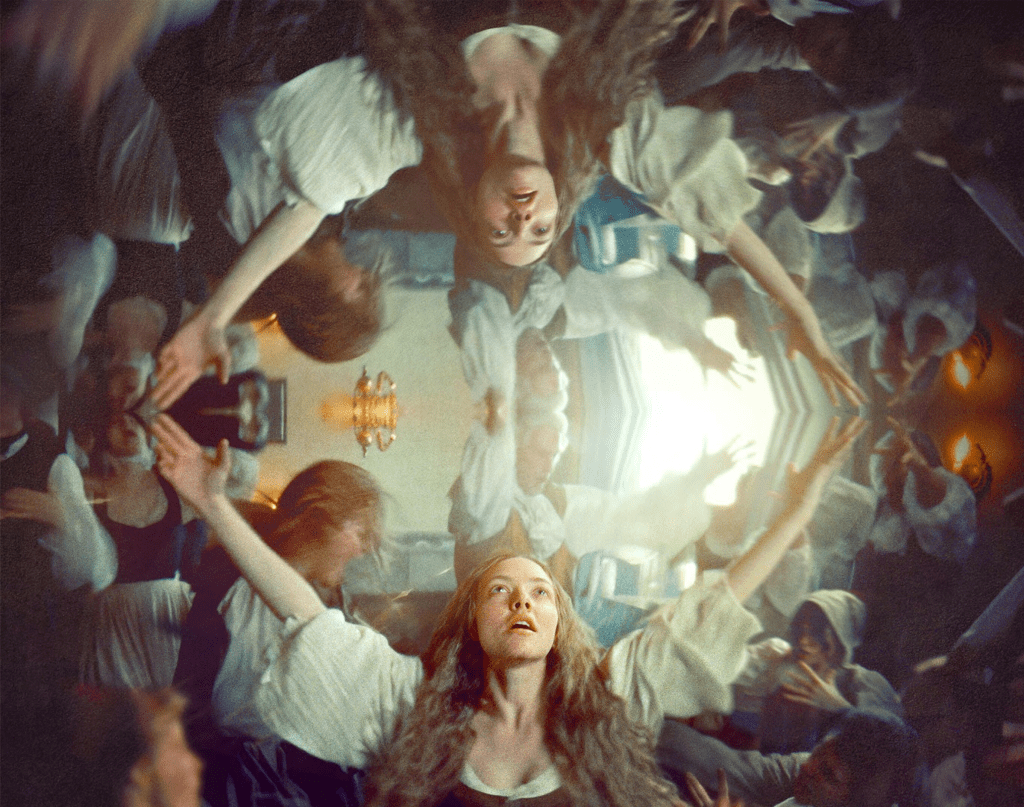
It is during his rescue of his mother that both Amleth and the audience are presented with an alternative truth: Knowing her wicked husband King Aurvandill was weak, Gudrún convinced his brother Fjölnir who she has always loved, to murder the King, and her son Prince Amleth so that they might live together happily.
It’s the 9th Century so all is fair in love, war and fratricide but during this reveal, there is a moment of conflict. Suddenly you are in Gudrún’s shoes. A young female slave a king forced himself on. Baring an unwanted child you have no say in marrying the man who did this to you and raising the child you never wanted and hate with every breath. There is no doubt in your mind that Gudrún tells the truth.
The conflict is there but the sympathy you have for her story, the joy you feel that she found a way to escape her fate – it flickers. It’s quickly extinguished.
This isn’t Gudrún’s story. It’s Amleth’s. And although a truth has shaken his belief, his truth remains primarily unchanged. His uncle killed his father and for that, he must die.
The protagonist’s perspective needs to eclipse all other narratives and versions of the truth. We believe what they believe, otherwise, like magic, it doesn’t hold true.




 Film Reviews & Movie Analysis
Leave a comment